
What Is Sankalp in Puja?
If you have ever sat for a puja at home or in a temple, you've probably seen this moment. The pujari pauses and places a little water, rice and a flower in your right hand. Then he asks your name, your gotra, and why you are doing the puja. You repeat a few Sanskrit words after him and release the water. It takes less than two minutes, so it is easy to treat it as a formality. In fact, it is the step that makes the whole puja yours.
By ISKCON KurukshetraGeneral0 comments
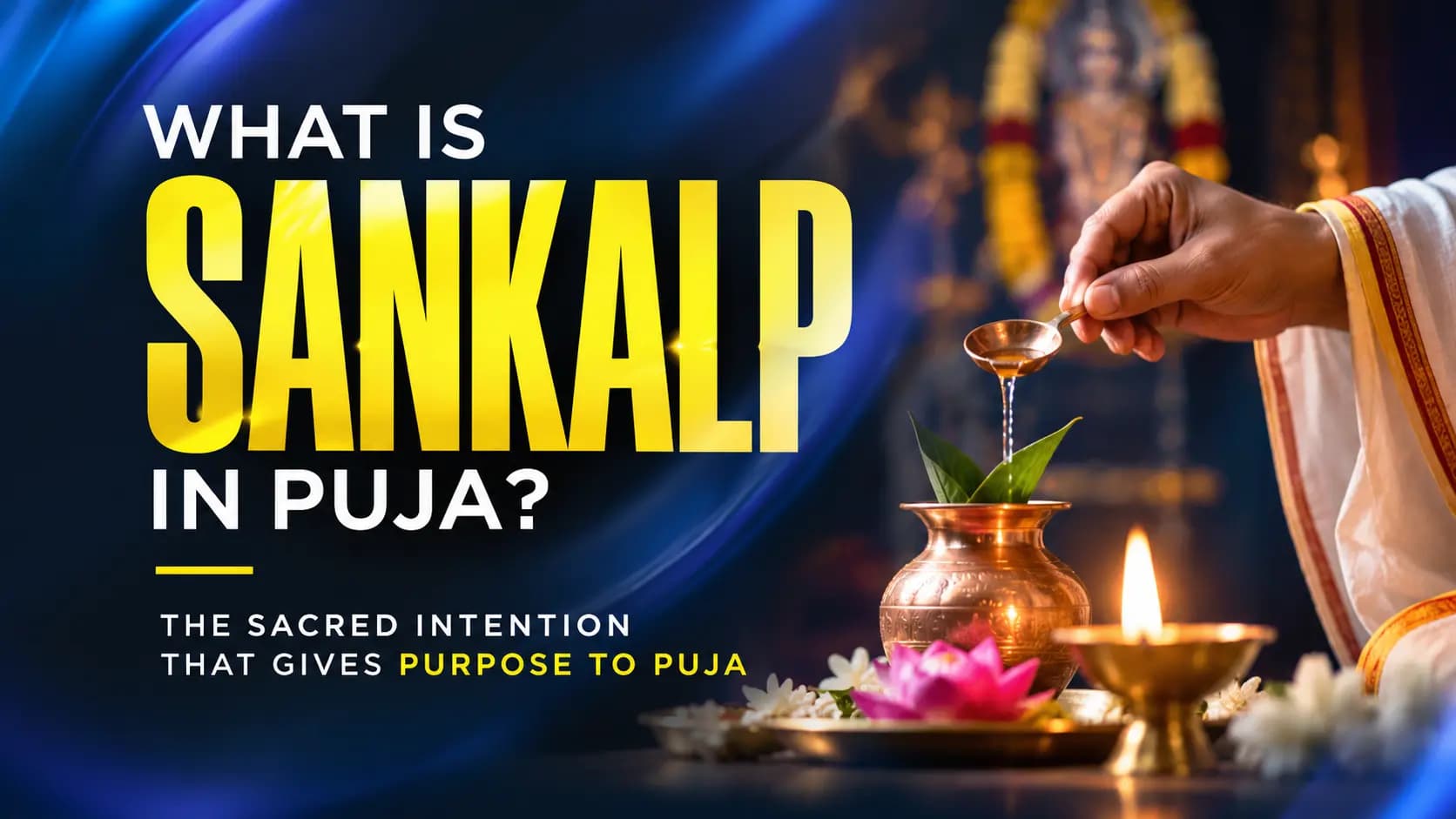
What is Sankalp?
Sankalp is the solemn vow, or firm intention, taken at the start of a puja, homam, vrat or any spiritual practice. In it, the worshipper declares who they are, where and when the ritual is happening, and the exact purpose for which it is offered. Holding water, rice and a flower in the right hand, they dedicate the puja to God and release the water as a sign of commitment. Sankalp is often called the bridge between the devotee and the Divine.
Without a sankalp, a puja is a beautiful ritual. With a sankalp, it becomes a personal offering from you to the Lord, for a clear purpose, at a recorded moment in time.
Meaning
The Sanskrit word saṅkalpa joins sam (together, fully) and kalpa (a firm decision or resolve formed in the mind). So sankalp means a resolve made with your whole heart, a decision your mind, words and actions all agree on. Some teachers also explain it as sat (truth, auspicious) + kalpa: an auspicious resolve. Both readings point to the same idea, a pure and steady intention.
The Manusmriti (2.3) says saṅkalpa-mūlaḥ kāmo vai yajñāḥ saṅkalpa-sambhavāḥ: every desire is rooted in resolve, and every sacrifice is born from it. In other words, no Vedic ritual begins without a sankalp.
Our epics are full of sankalps that shaped history. Devavrata vowed lifelong celibacy for his father's happiness, and the vow was so firm that he became known as Bhishma, "the one of the terrible vow." Hanuman resolved not to rest until he had found Mother Sita, and leapt across the ocean to keep that resolve. A sankalp in puja is the same power, used on a smaller scale in our own homes.
Why Is Sankalp in Puja Important?
It gives the puja a purpose. You know why you are sitting there, and so does the pujari.
It makes the puja personal. Your name and family line link the offering to you and the people you are praying for.
It fixes the puja in time and place. The sankalp names the exact day, month and holy place, a little like signing and dating a letter to God.
It focuses the mind. Saying your intention aloud pulls a wandering mind back to the deity before the worship begins.
It is a promise. Once you take a sankalp, tradition expects you to finish the puja or vrat you have committed to.
When is Sankalp Taken?
A sankalp is taken at the start of almost every sacred act:
Puja and archana: daily worship, festival pujas, Satyanarayan katha
Homam, havan and yagya: before the first offering into the fire
Vrat (fasting): on the morning the fast begins
Samskaras: naming ceremony, mundan, wedding, griha pravesh
Shraddha and tarpan: for the peace of departed ancestors
Daan and seva: before a charitable offering, such as feeding sadhus or offering a lamp in Kartik
Japa and meditation: many practitioners begin a japa vow, such as a number of rounds a day, or a meditation with a short silent sankalp. In Yoga Nidra, the sankalp is a short positive resolve repeated at the start and the end.
The 8 Parts of the Vow
A full Vedic sankalp moves from the vast to the personal. It starts with cosmic time and ends with your own name and wish.
Part | What it states | Example |
Invocation | Remembering Lord Vishnu | Om Vishnur Vishnur Vishnuh (some traditions add Sri Govinda Govinda Govinda) |
Cosmic time | The age of the universe | Second half of Brahma's life, Shveta Varaha kalpa, Kali Yuga |
Place | Where on earth the puja happens | Jambudvipa, Bharatavarsha, Kurukshetra |
Calendar time | Samvat, ayana, ritu (season), month, paksha, tithi, weekday, nakshatra | Kartik month, Shukla paksha, Ekadashi tithi, Friday, Shravana nakshatra |
Family line | Your gotra | Kashyap gotra |
Your name | Who is offering | Name of the worshipper (and family members, if included) |
Purpose | Why the puja is offered | For the Lord's pleasure; health, peace, removal of obstacles, family welfare, peace of ancestors or spiritual growth |
Commitment | What you will do | "I will perform this puja / homam / vrat" (kariṣye) |
Sankalp Mantra with Meaning
Wording varies by region and tradition, and the pujari fills in the details for the day. A commonly used form begins:
ॐ विष्णुर्विष्णुर्विष्णुः श्रीमद्भगवतो महापुरुषस्य विष्णोराज्ञया प्रवर्तमानस्य अद्य श्रीब्रह्मणो द्वितीयपरार्धे श्रीश्वेतवाराहकल्पे वैवस्वतमन्वन्तरे अष्टाविंशतितमे कलियुगे कलिप्रथमचरणे जम्बूद्वीपे भारतवर्षे … (स्थान, मास, पक्ष, तिथि, वासर) … …गोत्रोत्पन्नः …नामाहं … श्रीकृष्णप्रीत्यर्थं … करिष्ये।
In simple words: "Remembering Lord Vishnu, on this day in the current age of the universe, here in Bharatavarsha, at this place, in this month, paksha and tithi, I, [name], born in the [gotra] family, will perform this puja for the pleasure of Lord Krishna and for [purpose]."
You don't need to memorise it. The pujari recites it, and you repeat after him or simply listen with folded hands.
How to Take Sankalp: Step by Step
Bathe and sit facing the deity. Wear clean clothes, and sit on an asana facing east or north if you can, in sukhasana or padmasana.
Do achaman. Sip a little water three times while chanting the Lord's names, to purify yourself.
Take water, rice and a flower in your right hand. Some families add a coin or a betel leaf. Rest the cupped right hand over the left palm, or on your right knee.
State your intention. Recite the sankalp mantra, or repeat it after the pujari. Say your name, gotra and the purpose clearly. As the words are chanted, let your scattered thoughts settle on the deity in front of you.
Release the water. Let it flow onto the ground or into a plate in front of the deity. This seals the vow and symbolises surrendering your intention to the Divine. Some traditions close with "Om Tat Sat" (Bhagavad Gita 17.23).
Begin the puja with a calm mind. From here, every step of the worship is part of the offering you have just dedicated.
Don't know your gotra? That's common. Tradition allows you to say Kashyap gotra, since Sage Kashyapa is regarded as the father of all beings. You can also say Achyuta gotra, belonging to the family of the Lord.
When Puja Is Done on Your Behalf
Today many families can't be present for every puja. A parent abroad, a sick relative, or a busy working couple may ask a temple to perform the puja for them. The sankalp is what connects them to that worship, even from far away.
To take sankalp in your name, the pujari usually needs:
Full name of each person to be included
Gotra (or Kashyap / Achyuta gotra if unknown)
City where you live
Purpose or occasion: birthday, health, a new home, the memory of a loved one
Optional: rashi or nakshatra, for some pujas
What to listen for: if you watch your puja live or on a recording, listen near the start. The pujari will say your gotra and name, then the purpose, just before the word kariṣye ("I will perform"). That is your sankalp.
At ISKCON Kurukshetra, devotees perform pujas and seva on behalf of families across India and abroad, with a sankalp taken in each family's name. You can see the options on our Online Puja page.
Sankalp For Vrats and Special Pujas
The sankalp changes a little with the occasion:
Ekadashi vrat: taken on the morning of Ekadashi. You state that you will fast for the Lord's pleasure and break the fast on Dwadashi at the proper time (parana).
Navratri: one sankalp on the first day covers all nine days of worship and fasting.
Kartik vrat: many devotees take a sankalp for the whole month, such as offering a ghee lamp to Lord Damodar every evening.
Satyanarayan katha: the sankalp names the family and the occasion, such as a new home or a child's birthday.
Udyapan: when a series of vrats is completed, a closing sankalp formally concludes the vow.
How Is It Different from a Resolution?
Sankalp | Ordinary goal or resolution | |
Made before | God, with a witness (water, fire, deity) | Yourself |
Rests on | Faith and surrender | Willpower alone |
Purpose | Dharmic, for the Lord or others' good | Usually personal gain |
Outcome | Left in God's hands | Measured as success or failure |
A sankalp is also not just a wish. A wish asks for something. A sankalp commits you to doing something, and then offers the result to God.
Common Mistakes to Avoid
Rushing through it. It is the heart of the puja, not a formality before it.
A vague purpose. "For everything to be fine" is weaker than "for my mother's recovery from surgery."
Using the left hand. Water, rice and flowers are held in the right hand.
Vowing more than you can keep. A 40-day vrat you break on day three helps no one. Start with what you can complete.
A sankalp against someone. Tradition never accepts a resolve meant to harm another person.
Incomplete details for a remote puja. Double-check spellings of names and the gotra you send to the temple.
What the Bhagavad Gita Teaches
Here is something many people find surprising. The Gita uses the word sankalpa too, and it asks us to give up a certain kind of it.
In Bhagavad Gita 6.2, Krishna says na hy asannyasta-saṅkalpo yogī bhavati kaścana: no one becomes a true yogi without giving up selfish resolves. In 6.24 He asks us to abandon, completely, the desires born of such resolves.
So is a puja sankalp wrong? Not at all. Krishna is not asking us to stop wishing. He is asking us to change whom the wish is for. A sankalp made only for personal gain ties us to this world. A sankalp made for the Lord's pleasure frees us.
That is why, in the bhakti tradition, the sankalp usually includes the words śrī-kṛṣṇa-prīty-artham, "for the pleasure of Sri Krishna." You can still pray for your family's health or a loved one's peace. You simply place that prayer in Krishna's hands, as He asks in Gita 9.27: whatever you do, whatever you eat, whatever you offer or give away, do it as an offering to Me.
Turning a Sankalp into Seva
Many families take their sankalp one step further. Along with the puja, they offer something that serves the Lord's devotees, such as a meal for the sadhus and brahmacharis who live at the temple. A sankalp for a birthday, an anniversary or a departed parent then becomes service that feeds hundreds of devotees. You can read more about this on our Sadhu Seva page.
Frequently asked questions
Q. What is sankalp in puja?
Sankalp is the vow of intention taken at the start of a puja. The worshipper states their name, gotra, the time and place, and the purpose of the puja, then releases water from the right hand as a sign of commitment.
Q. What is the meaning of sankalp?
Sankalp means a firm, wholehearted resolve. It comes from the Sanskrit sam (fully) and kalpa (decision).
Q. What happens if you break a sankalp?
The puja or vrat stays incomplete, but it is not a curse. Sincerely ask the Lord's forgiveness, chant His names, and complete the vow or begin it again when you can. Scripture is lenient when a vow is broken for a real reason, such as illness.
Q. Why do we hold water in our hand during sankalp?
Water is a witness and a purifier in Vedic ritual. Releasing it shows that the vow has been made and handed over to God.
Q. Can a woman take sankalp?
Yes. Women take sankalp for pujas, vrats and seva in the same way.
Q. Can I take sankalp at home without a pujari?
Yes. Hold water, rice and a flower, state your name and your intention in simple words in your own language, and release the water. A sincere heart matters more than perfect Sanskrit.
Hare Krishna Spiritual Journey
Seek the Divine.
Transform Your Soul.
Join the ISKCON KKR community — embrace bhakti, serve with love, and discover your eternal purpose.
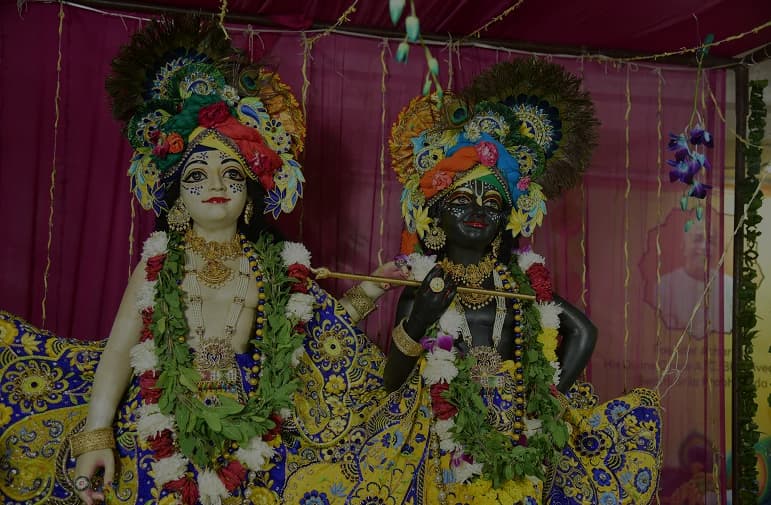
About the Author
ISKCON Kurukshetra
A team of devotees dedicated to sharing the timeless wisdom of Vedic scriptures and the teachings of Lord Krishna for the benefit of all seekers.
Our mission is to spread the message of Bhagavad Gita and Srila Prabhupada’s teachings with authenticity and devotion.

Comments