
Vaishnava
A Vaishnava is a devotee of Lord Vishnu or Lord Krishna. The meaning of the word, what Vaishnavas believe, how they live, the tilak and the four sampradayas.
By ISKCON KurukshetraGeneral0 comments
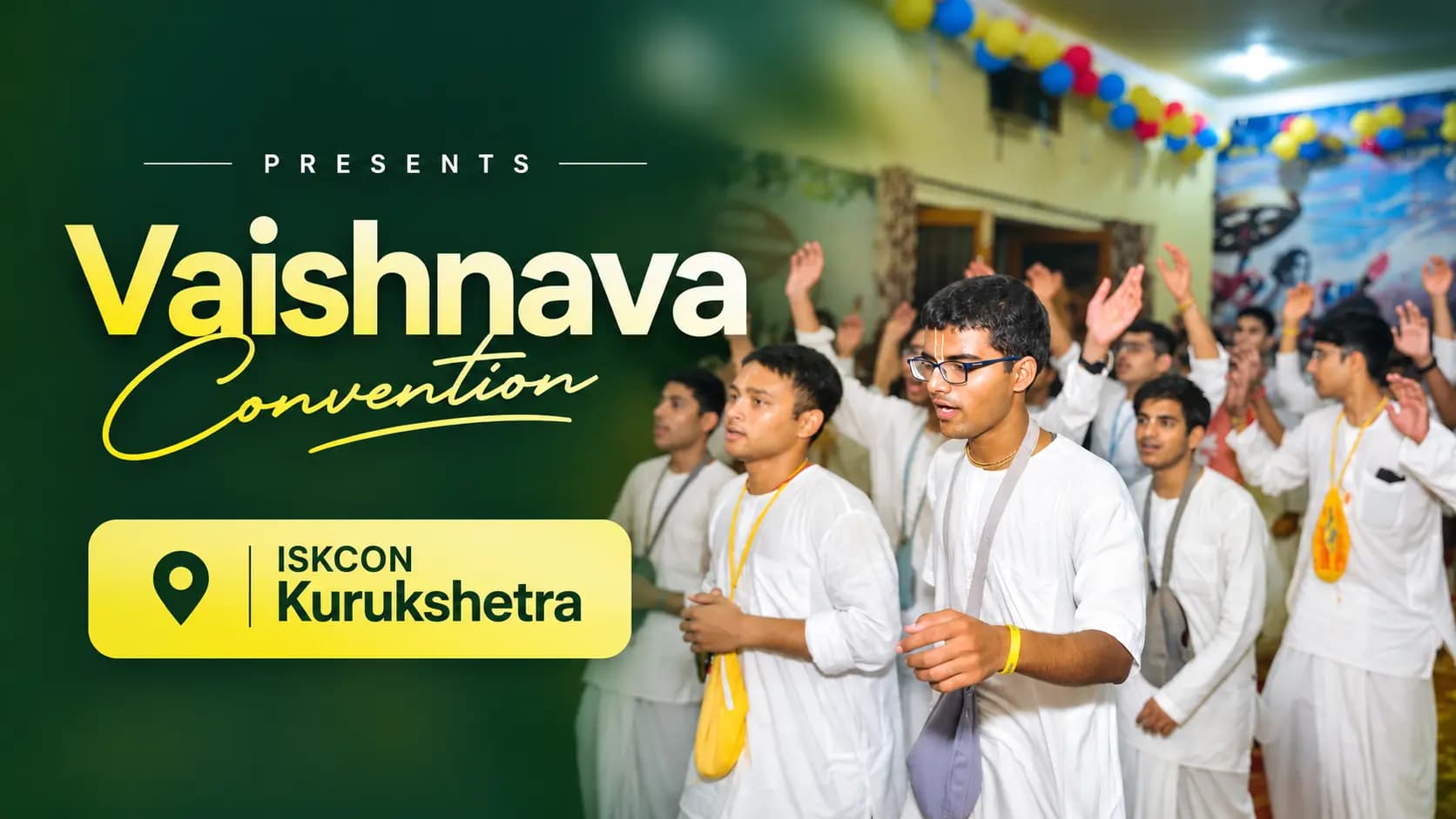
A Vaishnava is a devotee of Lord Vishnu or Lord Krishna, and of His incarnations such as Lord Rama. The word comes from the Sanskrit Vaiṣṇava, meaning "one who belongs to Vishnu", and the path a Vaishnava follows is called Vaishnavism, or Vaishnava dharma.
In Sri Caitanya Mahaprabhu's own words, the test is simpler than any rule of caste or ritual: whoever has the holy name of Krishna on their lips is a Vaishnava and deserves respect. The rest of this page explains what Vaishnavas believe, how they live, the four sampradayas, the tilak, and the questions people most often ask.
Vaishnava Meaning
"Vaishnav" and "Vaishnava" are the same word. The first is how it is said in Hindi and most North Indian languages; the second keeps the final vowel of Sanskrit. As a noun it names a person, a devotee of Vishnu. As an adjective it describes anything connected with Him: a Vaishnava temple, a Vaishnava song, a Vaishnava festival, the Vaishnava calendar.
Vishnu here does not mean one god among many. For Vaishnavas, Lord Vishnu, who is Lord Krishna Himself, is the Supreme Personality of Godhead, the source of every other form of God. Gaudiya Vaishnavas, the tradition of Sri Caitanya Mahaprabhu and of ISKCON, worship Krishna as the original form and Vishnu as His expansion.
Who Is a Vaishnava?
In Jagannatha Puri, Satyaraja Khan of Kulina-grama asked Sri Caitanya Mahaprabhu a plain question: how can we recognise a Vaishnava? His answer is kept in the Caitanya-caritamrta.
ataeva yāṅra mukhe eka kṛṣṇa-nāma
sei ta' vaiṣṇava, kariha tāṅhāra sammāna"One who is chanting the Hare Kṛṣṇa mantra is understood to be a Vaiṣṇava; therefore you should offer all respects to him."
Sri Caitanya-caritamrta, Madhya-lila 15.111, translation by Srila Prabhupada
A year later the same villagers asked again, and the Lord took them a step further. A person who chants the holy name all the time is a first-class Vaishnava, He said, and the highest Vaishnava is the one "whose very presence makes others chant the holy name of Kṛṣṇa" (Caitanya-caritamrta, Madhya 16.72 and 16.74). So the Caitanya-caritamrta describes three stages: one who has begun to chant, one who chants without stopping, and one whose company turns others toward Krishna.
Nothing in these verses mentions family, birth or the place someone comes from. A Vaishnava is known by devotion.
What Do Vaishnavas Believe?
Vaishnava teachers explain the philosophy in different ways, but a few beliefs are shared by every Vaishnava school.
God is a person. The Supreme is Lord Vishnu or Krishna, with a form, a name, qualities and pastimes. He is not an impersonal light into which the soul dissolves.
The soul is eternal. Every living being is a spiritual soul, part of the Lord, and different from the body it lives in for a while.
Bhakti is the goal and the path. Loving service to the Lord, called bhakti, is both how one reaches Him and what one receives in the end.
The Lord descends. He appears in this world again and again as avatars, such as Lord Rama, Lord Narasimha and Lord Krishna, to protect His devotees and restore dharma.
Scripture is the guide. The Bhagavad-gita, the Srimad-Bhagavatam, the Vishnu Purana, the Ramayana and the Upanishads are read through the explanations of the acaryas in disciplic succession.
Also Read: https://iskconkurukshetra.org/chaturmas/
Qualities of a Devotee
When Sri Caitanya Mahaprabhu taught Srila Sanatana Gosvami, He listed twenty-six qualities that grow naturally in a devotee's heart. Srila Prabhupada's translation begins: "Devotees are always merciful, humble, truthful, equal to all, faultless, magnanimous, mild and clean," and goes on to say that they completely control the six bad qualities, such as lust, anger and greed (Caitanya-caritamrta, Madhya 22.78 to 80).
These qualities are not a checklist to pass before one may call oneself a devotee. They are what bhakti does to a person over years of chanting and service. Among them, humility is the one Sri Caitanya Mahaprabhu put first in His own prayer.
tṛṇād api su-nīcena
taror iva sahiṣṇunā
amāninā māna-dena
kīrtanīyaḥ sadā hariḥ"One who thinks himself lower than the grass, who is more tolerant than a tree, and who does not expect personal honor yet is always prepared to give all respect to others can very easily always chant the holy name of the Lord."
Sri Caitanya-caritamrta, Adi-lila 17.31, translation by Srila Prabhupada
A Vaishnava is lower than the grass in his own eyes and gives respect to everyone else. That is the mood the tradition values above learning or rank.
How Does a Vaishnava Live?
A Vaishnava's day is arranged around remembering Krishna. The details differ from one tradition and one home to another, but most Vaishnavas keep these practices.
Chanting the holy name. Gaudiya Vaishnavas chant the Hare Krishna maha-mantra on tulasi beads (japa) and sing it together in kirtan. Initiated devotees in ISKCON chant sixteen rounds a day.
Offering food to the Lord. Vaishnavas cook vegetarian food, offer it to Krishna first, and then honour it as prasadam. Meat, fish and eggs are not offered or eaten.
Hearing scripture. A daily class from the Bhagavad-gita or the Srimad-Bhagavatam keeps the mind fixed on Krishna.
Deity worship. In temples and in many homes, the Lord is served in His Deity form with aratis, flowers, lamps and offerings.
Ekadashi and festivals. Vaishnavas fast from grains on Ekadashi and keep the appearance days of the Lord and His devotees, such as Janmashtami, Rama Navami and Gaura Purnima. The Vaishnava calendar lists these dates each year.
Tilak and tulasi beads. Many Vaishnavas wear tilak on the forehead and a strand of tulasi beads around the neck as a sign that they belong to the Lord.
Vaishnava Tilak
Vaishnava tilak is a vertical mark on the forehead, usually of clay, that shows a person is a devotee of Vishnu or Krishna. Each sampradaya has its own shape. Gaudiya Vaishnavas, including ISKCON devotees, wear two vertical lines of cream-coloured gopi-candana clay joined above the bridge of the nose, with a leaf-shaped mark on the nose itself, which represents the tulasi leaf. Sri Vaishnavas of the South wear a white mark with a red or yellow line in the centre.
Tilak is applied after bathing, while chanting names of the Lord, and it marks the body as a place where the Lord lives. Shaiva devotees, by contrast, wear three horizontal lines of ash, so the two are easy to tell apart.
The Four Vaishnava Sampradayas
Vaishnava teaching is passed down in disciplic succession, called parampara or sampradaya. Speaking in Bombay in 1974, Srila Prabhupada named them.
"There are four Vaiṣṇava sampradāyas: the Rudra-sampradāya, Brahma-sampradāya, Kumāra-sampradāya, and Lakṣmī-sampradāya, Śrī-sampradāya."
Srila Prabhupada, lecture on Bhagavad-gita 4.5, Bombay, 25 March 1974
In the same lecture he quoted the Padma Purana, sampradāya-vihīnā ye mantrās te niṣphalā matāḥ: a mantra that does not come through a bona fide sampradaya bears no fruit. The four lines are linked with great acaryas:
Sri sampradaya: Sri Ramanujacarya, the philosophy of vishishtadvaita.
Brahma sampradaya: Sri Madhvacarya, the philosophy of dvaita-vada (the Lord is different from the souls and from matter).
Rudra sampradaya: Sri Vishnusvami, and later Sri Vallabhacarya.
Kumara sampradaya: Sri Nimbarkacarya, the philosophy of dvaitadvaita.
What Is Gaudiya Vaishnavism?
Gaudiya Vaishnavism is the tradition of Sri Caitanya Mahaprabhu, who appeared in Navadvipa, Bengal, in 1486. "Gauda" is the old name of Bengal. In the same lecture, Srila Prabhupada traced its line from Lord Krishna through Brahma, Narada, Vyasa and Madhvacarya to Madhavendra Puri, Isvara Puri and Sri Caitanya Mahaprabhu, which is why it is counted in the Brahma-Madhva line.
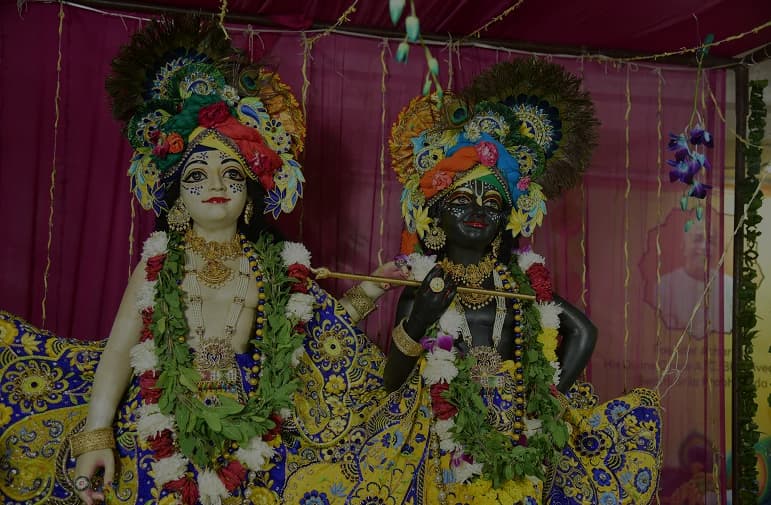
Gaudiya Vaishnavas worship Radha and Krishna, and they teach that in this age the easiest and most complete practice is the chanting of the holy name. ISKCON, founded by Srila Prabhupada in New York in 1966, carries this tradition across the world.
Vaishnava and Shaiva: What Is the Difference?
Vaishnavas worship Lord Vishnu or Krishna as the Supreme. Shaivas worship Lord Shiva as the Supreme. Both are major traditions within what is today called Hinduism, along with Shakta and Smarta traditions, and they differ in their main deity, their scriptures, their tilak and their festivals.
Vaishnavas do not look down on Lord Shiva. The Srimad-Bhagavatam itself calls him the greatest Vaishnava.
nimna-gānāṁ yathā gaṅgā
devānām acyuto yathā
vaiṣṇavānāṁ yathā śambhuḥ
purāṇānām idam tathā"Just as the Gaṅgā is the greatest of all rivers, Lord Acyuta the supreme among deities and Lord Śambhu [Śiva] the greatest of Vaiṣṇavas, so Śrīmad-Bhāgavatam is the greatest of all Purāṇas."
Srimad-Bhagavatam 12.13.16, translation by Srila Prabhupada
Vaishnavas offer respect to Lord Shiva as a devotee of the Lord. Arguments between the two groups have come up in history, but the scripture both read gives Lord Shiva a place of honour among the devotees.
Is a Vaishnava a Brahmin?
Not by birth. A Brahmin, in the social sense, is someone born into a Brahmin family, while a Vaishnava is anyone who has taken to devotion to Krishna, whatever family they come from. The two are not the same, though a person can be both.
In his purport to Caitanya-caritamrta, Madhya 15.108, Srila Prabhupada quotes the verse yathā kāñcanatāṁ yāti kāṁsyaṁ rasa-vidhānataḥ / tathā dīkṣā-vidhānena dvijatvaṁ jāyate nṛṇām. He explains that just as bell metal is turned into gold when touched by mercury, a person who is properly initiated acquires the qualities of a brahmana. In the Vaishnava view, qualification comes from devotion and initiation, and a sincere Vaishnava is respected above any title of birth.
Are Hindu and Vaishnava the Same?
Vaishnavism is one of the traditions that make up Hinduism, so most Vaishnavas in India would also call themselves Hindu. The difference is one of focus. "Hindu" is a broad name for many paths; "Vaishnava" names the path of devotion to Vishnu or Krishna in particular. Today there are also Vaishnavas all over the world, born outside India, who follow the same practices.
How to Become a Vaishnava
No one needs a certificate to begin. The Caitanya-caritamrta (Madhya 15.108) says the holy name does not wait for initiation or for the rituals that come before it. Anyone can start today.
Chant the Hare Krishna maha-mantra: Hare Krishna Hare Krishna, Krishna Krishna Hare Hare, Hare Rama Hare Rama, Rama Rama Hare Hare. Even a few rounds on beads each morning is a beginning.
Read the Bhagavad-gita As It Is and the Srimad-Bhagavatam, a little each day.
Offer your food to Krishna before you eat it, and keep a vegetarian kitchen.
Visit a Krishna temple, join a kirtan, and keep the company of devotees.
When you are ready, seek shelter of a bona fide spiritual master in one of the four sampradayas and accept initiation (diksa).
Frequently Asked Questions
Q. Can a Vaishnava get married?
Yes. A Vaishnava can live as a householder (grihastha) and serve Krishna with his or her family. Many great Vaishnavas were married, including Sri Advaita Acarya and Srila Bhaktivinoda Thakura. What matters is that the home is centred on Krishna.
Q. How can I serve Vaishnavas?
Chant together with them, listen when they speak about Krishna, and offer them prasadam. You can also sponsor a meal for sadhus through Sadhu Bhojan seva.
Q. Are Brahmins and Vaishnavas the same?
No. A Brahmin is defined by varna, and in practice by birth, while a Vaishnava is defined by devotion to Krishna. A Brahmin may or may not be a Vaishnava, and a Vaishnava may come from any family.
Q. Do Vaishnavas eat onion and garlic?
Most Vaishnavas, including ISKCON devotees, avoid onion and garlic, along with meat, fish and eggs, because these cannot be offered to Krishna.
Q. What is the difference between Vaishnav and Vaishnava?
There is none in meaning. "Vaishnav" is the Hindi spelling and "Vaishnava" keeps the Sanskrit ending. Both mean a devotee of Vishnu or Krishna.
Q. Who is the greatest Vaishnava?
The Srimad-Bhagavatam (12.13.16) calls Lord Shiva the greatest of Vaishnavas. The Caitanya-caritamrta (Madhya 16.74) describes the highest Vaishnava as the one whose very presence makes others chant the holy name of Krishna.
Hare Krishna Spiritual Journey
Seek the Divine.
Transform Your Soul.
Join the ISKCON KKR community — embrace bhakti, serve with love, and discover your eternal purpose.
About the Author
ISKCON Kurukshetra
A team of devotees dedicated to sharing the timeless wisdom of Vedic scriptures and the teachings of Lord Krishna for the benefit of all seekers.
Our mission is to spread the message of Bhagavad Gita and Srila Prabhupada’s teachings with authenticity and devotion.
Comments