
Sattvic Food
Sattvic food is pure, fresh, vegetarian food that brings clarity, calm and good health. The word comes from sattva, the mode of goodness. A sattvic diet includes fresh fruits, vegetables, whole grains, lentils, milk, ghee, nuts and honey. It avoids meat, fish, eggs, onion, garlic, alcohol and stale or overly spicy food.
By ISKCON KurukshetraGeneral0 comments
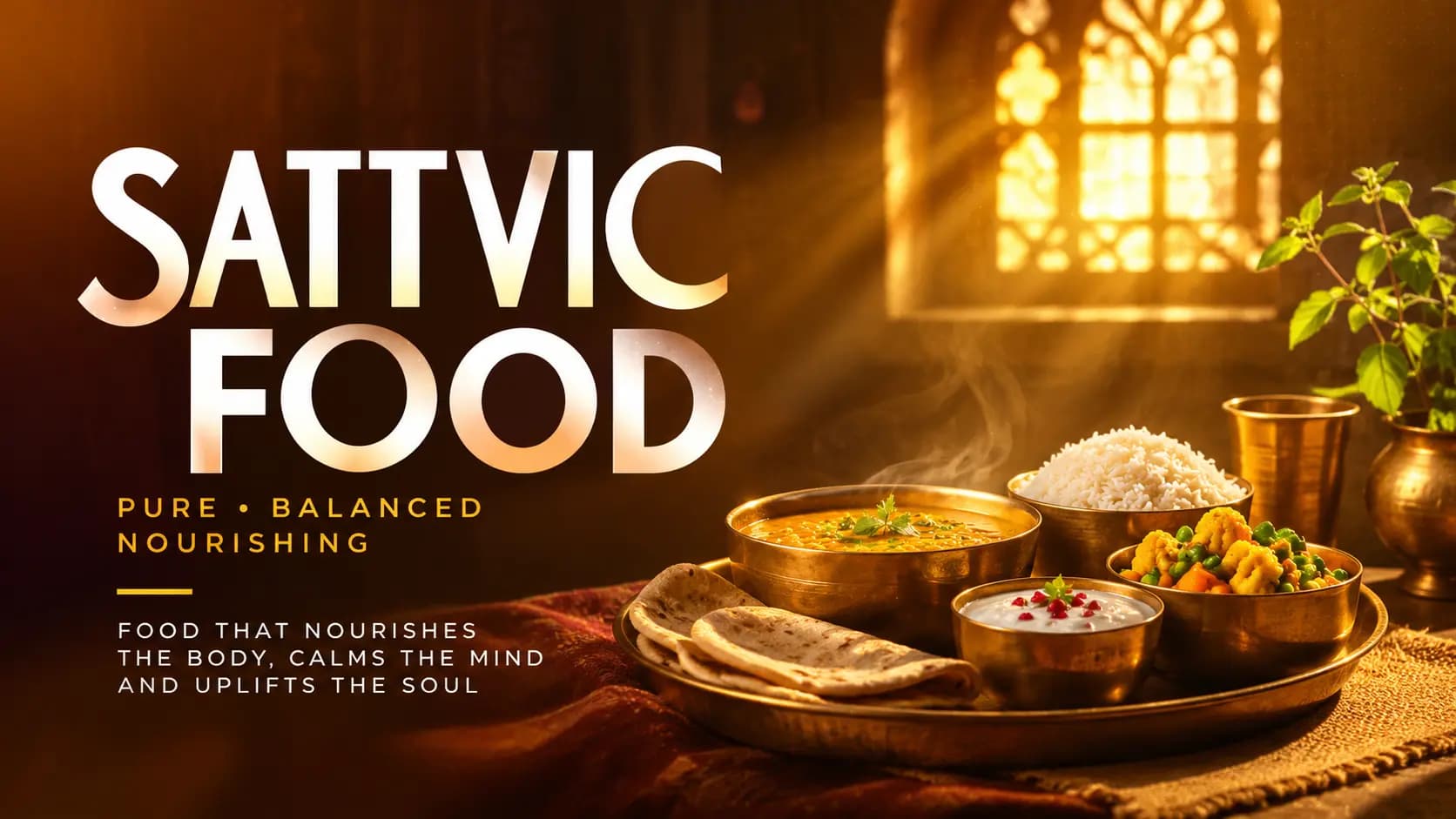
A sattvic diet is also called the yogic diet. It comes from Ayurveda and yoga, and it rests on ahimsa, the principle of non-harm. Sattva is one of the three gunas (qualities of nature): sattva brings balance and clarity, rajas brings activity and restlessness, and tamas brings heaviness and inertia.
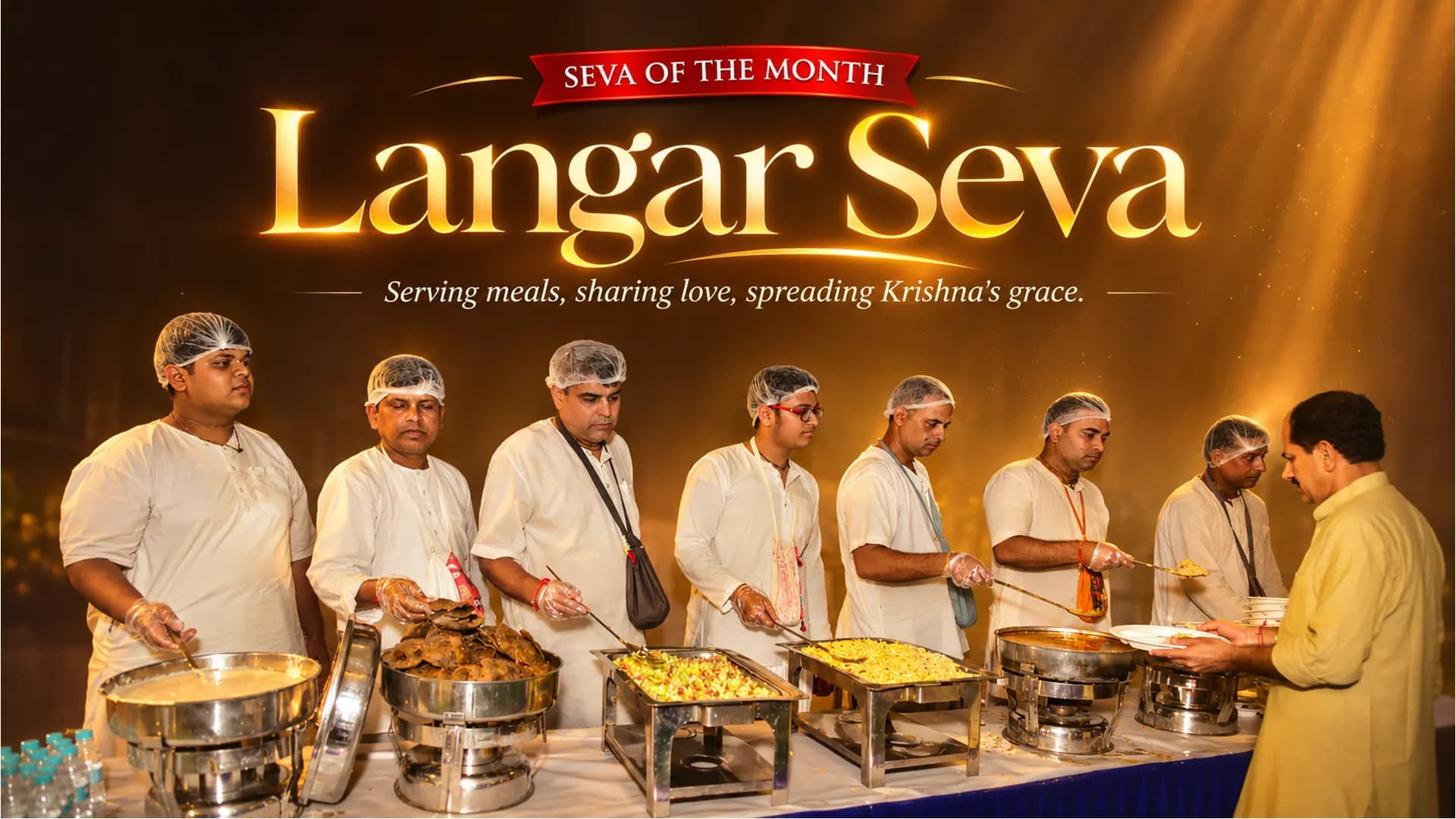
Walk into our temple kitchen at Kurukshetra early in the morning and you will see this idea in action. Devotees wash vegetables in silence, the dal simmers slowly in ghee and cumin, and no one tastes the food before it is offered to Krishna. Nothing fancy. Just simple ingredients, cooked with care, and then served to thousands of people through our food donation seva.
That is really what sattvic food is about. It is not a trendy diet. It is a way of eating that has fed sages, families and pilgrims in India for thousands of years. In this guide you will learn what the Bhagavad Gita says about food, which foods are sattvic, why we skip onion and garlic, and how to bring sattvic eating into your own kitchen.
Types of food in Bhagavad Gita
In Bhagavad Gita chapter 17, verses 8 to 10, Lord Krishna sorts food into three groups by its effect on the body and mind: sattvic (goodness), rajasic (passion) and tamasic (ignorance).
Type | What Krishna says about it | Common examples | Effect on you |
Sattvic (goodness) | Juicy, wholesome, nourishing and pleasing to the heart. It increases life, strength, health, happiness and satisfaction (BG 17.8). | Fresh fruit, vegetables, rice, wheat, moong dal, milk, ghee, nuts | Calm mind, steady energy, good digestion |
Rajasic (passion) | Too bitter, sour, salty, hot, pungent, dry or burning. It causes distress, misery and disease (BG 17.9). | Very spicy curries, deep-fried snacks, excess tea and coffee, onion, garlic | Restlessness, anger, cravings |
Tamasic (ignorance) | Cooked more than three hours before eating, tasteless, stale, decomposed or impure (BG 17.10). | Meat, fish, eggs, alcohol, leftovers, processed and reheated food | Dullness, laziness, heavy body |
The lesson is simple: you become what you eat. Food does not only fill the stomach. It shapes your mood, your thoughts and how easily you can focus on prayer or work.
Sattvic Food List: What to Eat and What to Avoid
Use this list when planning your weekly groceries. Fresh, seasonal and locally grown is always best.
Food group | Sattvic foods to eat | Foods to avoid |
Grains | Rice, wheat, barley, millets (jowar, bajra, ragi), oats | Refined flour (maida) in excess, stale bread |
Lentils and legumes | Moong dal, masoor, toor dal, chana, rajma (well cooked) | Hard-to-digest beans eaten raw or undercooked |
Vegetables | Lauki, tori, pumpkin, carrot, spinach, beans, potato, sweet potato, cucumber | Onion, garlic, mushrooms, leeks |
Fruits | Banana, apple, papaya, mango, pomegranate, guava, dates, figs | Overripe, rotting or canned fruit with syrup |
Dairy | Fresh cow's milk, ghee, curd, paneer, buttermilk, butter | Old curd, processed cheese |
Nuts and seeds | Almonds, cashews, walnuts, raisins, sesame, pumpkin seeds | Heavily salted, fried packet nuts |
Sweeteners | Jaggery, raw sugar, honey (never heated) | White sugar in excess, artificial sweeteners |
Spices | Cumin, turmeric, ginger, coriander, fennel, cardamom, black pepper, hing (asafoetida) | Excess red chilli, very hot masalas |
Drinks | Water, herbal teas, fresh juice, buttermilk, warm milk | Alcohol, tea, coffee, soft drinks, energy drinks |
Non-vegetarian | None | Meat, fish, eggs |
Quick tip: Hing (asafoetida) and ginger give dal and sabzi the deep flavour most people expect from onion and garlic. Fry a pinch of hing in ghee before adding your vegetables.
Why is Sattvic Food Made Without Onion and Garlic?
Onion and garlic are rajasic and tamasic, and they cannot be offered to Krishna. Here is why, in plain words:
They excite the senses. Ayurveda and the Vedic texts describe onion and garlic as heating and stimulating. They can increase restlessness, anger and desire, which makes it harder to keep a calm, prayerful mind.
They are not offered to the Lord. In the Vaishnava tradition, only foods in the mode of goodness are cooked for Krishna. Onion and garlic are left out of every offering, so they are left out of the kitchen too.
They cloud meditation. Monks, yogis and serious practitioners of japa and meditation have avoided them for centuries for this reason.
We know it can feel hard at first, especially if you grew up on tadka with onion and garlic. Most people tell us that within two or three weeks they stop missing it. Ginger, hing, tomato, fresh coriander and a good spoon of ghee do the job beautifully.
Benefits of a Sattvic Diet
A sattvic diet supports both body and mind. These are the benefits people notice most:
Better digestion. Freshly cooked, lightly spiced food made with ghee is gentle on the stomach. Less acidity, less bloating.
A calmer mind. Without heavy, spicy and stale food, many people find their mood is steadier and they react less.
Steady energy all day. Whole grains, dal and fruit release energy slowly, so there is no post-lunch slump.
Easier meditation and chanting. A light stomach and a clear head make japa, prayer and study feel natural.
Healthier weight. Home-cooked, plant-based meals with little processed food help many people manage their weight.
Kindness to all living beings. A sattvic diet is fully vegetarian, so no animal suffers for your meal.
Spiritual growth. When sattvic food is offered to Krishna first, it becomes prasadam. Eating prasadam purifies the heart (BG 3.13).
A sattvic diet is a lifestyle, not a medical treatment. If you have a health condition, speak to your doctor before making big changes.
From Sattvic Food to Prasadam: Cooking for Krishna
Sattvic food is pure. Prasadam is sattvic food that has been offered to Krishna with love, and that makes it spiritual. In the Gita (9.26), Krishna says that if someone offers Him a leaf, a flower, a fruit or water with devotion, He accepts it.
This is how food is cooked and offered in our temple kitchen, and you can follow the same steps at home:
Bathe and wear clean clothes before entering the kitchen.
Use only sattvic, vegetarian ingredients. No onion, garlic, meat, fish or eggs.
Do not taste while cooking. The first taste belongs to Krishna.
Cook with a peaceful mind. Many devotees chant the Hare Krishna mantra or play kirtan while they cook.
Place a portion on a clean plate kept only for offering, in front of a picture of Krishna.
Offer it with a simple prayer and wait a few minutes.
Mix the offered portion back into the pots. Now the whole meal is prasadam to share with family and guests.
Simple One-Day Meal Plan
You do not need special ingredients to start. Here is a day of sattvic eating using food found in any Indian kitchen.
Meal | What to eat |
Early morning | Warm water, 4–5 soaked almonds and a few raisins |
Breakfast | Vegetable poha or upma with peanuts, plus a banana |
Lunch | Rice, moong dal, lauki sabzi, two phulkas with ghee, fresh curd and cucumber |
Evening | Seasonal fruit or roasted makhana, herbal tea |
Dinner (before 8 pm) | Light moong dal khichdi with ghee, or vegetable daliya |
Bedtime | Warm milk with a pinch of turmeric or cardamom |
Satvik Food on Ekadashi and in Kartik Month
On Ekadashi, devotees eat sattvic food but avoid all grains and beans. That means no rice, wheat, dal, besan or suji for the day.
Allowed on Ekadashi | Avoid on Ekadashi |
Fruits, milk, curd, paneer, ghee | Rice, wheat, millets, oats |
Potato, sweet potato, pumpkin, cucumber, tomato | All dals, beans, peas, chana, besan |
Sabudana, kuttu, singhara and rajgira flour | Suji, maida, corn |
Nuts, makhana, peanuts | Packaged hing (it often contains wheat flour) |
Rock salt (sendha namak), cumin, black pepper, ginger | Onion, garlic (avoided every day) |
Customs vary slightly between families and temples, so follow the guidance of your own spiritual teacher.
Kartik month (the month of Lord Damodara) is a time when many devotees take their sattvic eating a step further. Some avoid urad dal and mustard oil for the whole month, and many add extra fasting, chanting and deep daan.
Frequently Asked Questions
What is sattvic food in simple words?
Sattvic food is fresh, pure, vegetarian food that is easy to digest and keeps the mind calm. It includes fruits, vegetables, grains, dal, milk, ghee and nuts, and leaves out meat, eggs, onion, garlic and alcohol.
What not to eat in Satvik food?
Avoid meat, fish, eggs, onion, garlic, mushrooms, alcohol, tea, coffee, stale or reheated food, processed snacks, and anything too spicy, sour, salty or deep-fried.
Why is the onion not satvik?
Onion is rajasic and tamasic. It heats the body and stirs the senses, increasing restlessness and desire, so it is never offered to Krishna or used in satvik cooking.
What is the difference between sattvic food and prasadam?
Sattvic food is pure in quality. Prasadam is sattvic food that has been offered to Krishna with devotion. Prasadam is considered spiritually purifying.
Hare Krishna Spiritual Journey
Seek the Divine.
Transform Your Soul.
Join the ISKCON KKR community — embrace bhakti, serve with love, and discover your eternal purpose.
About the Author
ISKCON Kurukshetra
A team of devotees dedicated to sharing the timeless wisdom of Vedic scriptures and the teachings of Lord Krishna for the benefit of all seekers.
Our mission is to spread the message of Bhagavad Gita and Srila Prabhupada’s teachings with authenticity and devotion.




Comments