
Vigrah Seva
Vigrah Seva (also written Vigraha Seva or Archa Vigraha Seva) is loving service to the Deity form of the Lord in Sanatan Dharma. It means waking, bathing, dressing, feeding and worshipping the Deity every day, the way you would care for a beloved guest living in your home.
By ISKCON KurukshetraGeneral0 comments
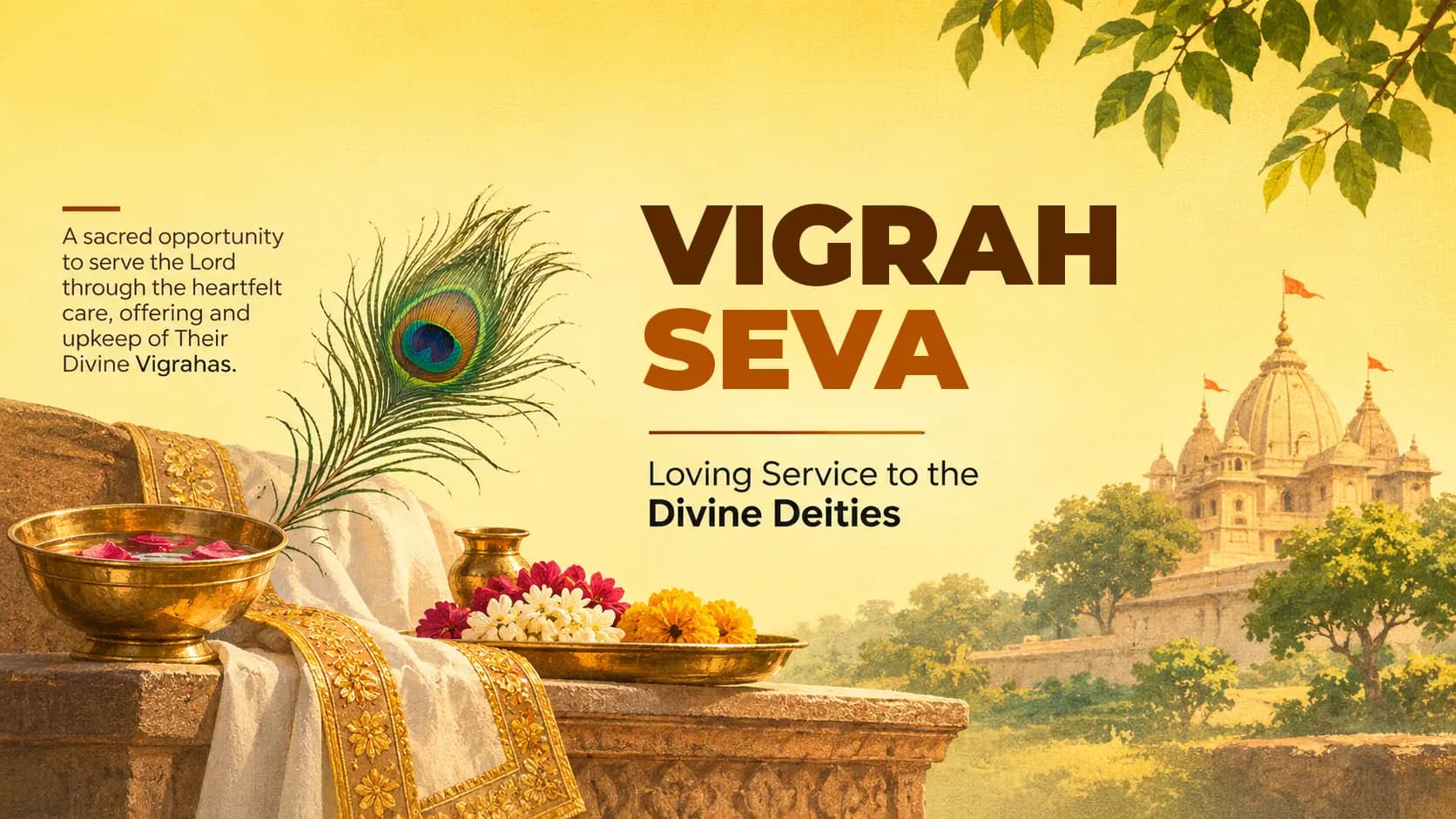
If you have ever stood in a temple at 4:30 in the morning and watched the curtains open for Mangala Aarti, you have seen Vigrah Seva at work. Someone was up an hour before you. They cleaned the altar, cooked the first offering and lit the lamps.
When you donate for Vigrah Seva, you become part of that care. Your offering pays for the flowers, the garments, the food and the daily worship of the Deities, and your name is offered at the altar along with it.
What does "Vigrah" mean?
Vigraha is a Sanskrit word for "form". Seva means "service". Put together, Vigrah Seva means service to the Lord's form.
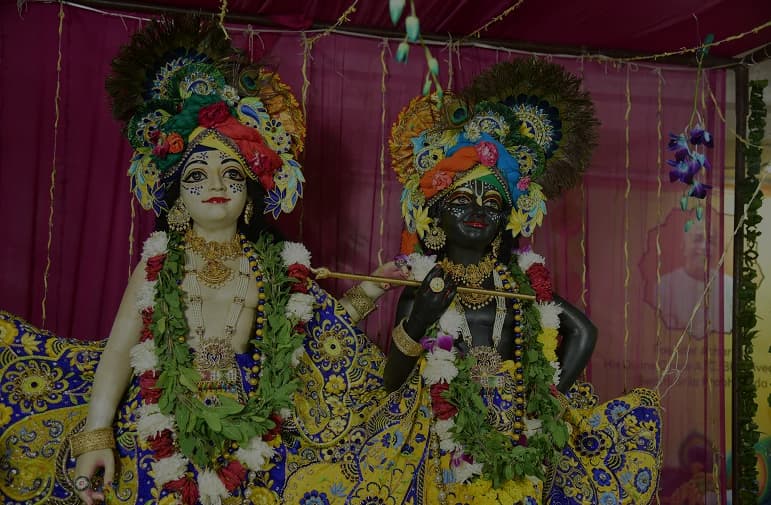
The tradition does not see the Deity as a statue that only represents God. Scriptures such as the Srimad Bhagavatam explain that the Lord, out of mercy, appears in a form that our eyes can see and our hands can serve. That form is the arca-avatara, the Lord's incarnation as the worshipable Deity. Most of us can't see the spiritual form of Krishna directly. The Deity lets us serve Him anyway.
Eight Forms of the Deity
The Srimad Bhagavatam (11.27.12) lists eight kinds of material in which the Lord can be worshipped:
Stone (shaili)
Wood (daru-mayi)
Metal (lauhi)
Clay or earth (lepya)
Painting (lekhya)
Sand (saikati)
The mind (mano-mayi): a form meditated on within the heart
Jewels (mani-mayi)
This matters for ordinary families. You don't need a marble altar to begin Vigrah Seva. A framed picture of Radha Krishna, offered with sincerity, is already a doorway.
What does Vigrah Seva include?
Temple worship follows a daily rhythm, from the early-morning offering to putting the Deities to rest at night. The main parts of the service are:
Bhoga (food offering): fresh vegetarian food, cooked with care and offered before anyone else eats. Once offered, it becomes prasadam.
Aarti: offering lamps, incense, water, a cloth and flowers while devotees sing. Temples usually begin the day with Mangala Aarti before sunrise.
Shringar (dressing): bathing the Deities and dressing them in fresh garments (poshak), ornaments and flower garlands.
Flower and decoration service: stringing garlands and decorating the altar and the temple room.
Cleaning: washing the altar, the utensils and the temple floor. It's the simplest service and one of the most valued.
Kirtan and reading: singing the holy names and reading scripture before the Deities.
None of these needs to be grand. In the Bhagavad Gita (9.26), Krishna says that if someone offers Him a leaf, a flower, fruit or water with devotion, He accepts it. What He accepts is love, not the price tag.
Why Is Vigrah Seva Important?
Because love needs something to do.
It turns love into action. Love for God that never acts slowly fades into a feeling we visit only on festivals. Vigrah Seva gives that love a pair of hands: a flower you chose, a meal you cooked, a garment you helped stitch.
The need is ours, not His. The Lord is already complete and doesn't need our flowers. Serving Him lets us practise what the Gita keeps returning to: acting for Krishna instead of for ourselves.
It becomes a relationship. Done every day, seva stops feeling like a duty and starts to feel like visiting a friend.
The worship can never stop. Once a Deity is installed, it can't pause for even one day. Every morning offering, fresh garland and evening Aarti depends on someone choosing to serve.
It answers Krishna where He spoke. Serving Him in Kurukshetra, near where He spoke the Bhagavad Gita to Arjuna, is a quiet way of answering what He asked for there.
How Is Vigrah Seva Performed at the Temple?
At ISKCON Kurukshetra, the temple is open from 4:30 AM to 1:00 PM and from 4:00 PM to 9:00 PM. A typical day looks like this:
Before dawn: the pujaris wake the Deities, offer the first Bal Bhoga and perform Mangala Aarti.
Morning: the Deities are bathed and dressed for the day. Then comes Darshan Aarti and the main morning offering.
Midday: the Deities rest and the temple closes in the afternoon.
Evening: the doors reopen, the evening Bhoga is offered and Sandhya Aarti is sung.
Night: after the last offering and Aarti, the Deities are put to rest.
Every step is done the way you would care for someone you love. You don't rush, cut corners or skip a meal.
Benefits
Devotees describe the benefits less as rewards and more as changes in the heart:
It makes God personal. You stop thinking about the Lord as an idea and start relating to Him as someone you serve.
It trains the mind. Fixed times, clean hands and careful offerings build discipline and remove distractions.
It purifies the senses. Your eyes see the Deity, your hands serve, your tongue tastes prasadam and your ears hear kirtan. The whole body gets used in devotion.
It brings a home or community together. Families that serve the Deity daily often say it becomes the calm centre of the day.
Its blessings reach others. Every offering becomes prasadam, and prasadam is shared with visitors and people in need.
Also Read: https://iskconkurukshetra.org/world-holy-name-festival/
Offering Daily Seva to the Deities at Home
Yes. Many devotees start this way:
Set up a clean, simple altar with a picture of Sri Sri Radha Krishna or Srila Prabhupada.
Offer a glass of water, a flower or some fruit every morning, saying a short prayer.
Cook a simple vegetarian meal, without onion, garlic, meat, fish or eggs, and offer it before eating.
Light a ghee lamp or incense in the evening and sing or chant for a few minutes.
Keep the altar clean and don't place it in the bathroom or bedroom.
Start small and stay consistent. Five sincere minutes a day is better than one elaborate offering a month.
How Can You Contribute to Vigrah Seva?
You can serve the Deities in three ways:
In person: volunteer for cleaning, garland-making or kitchen seva during temple hours.
Online: if you can't come to Kurukshetra, you can offer Vigraha Seva online, such as a flower, poshak or bhoga offering, in your own name or someone else's. See the seva options below.
Through prasadam: support the food that is offered to the Deities and then shared as prasadam through Anna Daan Seva.
How Is Your Vigrah Seva Donation Used?
Every rupee becomes something you could touch on the altar:
Food for the Lord: fresh vegetables, grains, milk, ghee and fruit for the daily offerings.
Flowers and garlands: bought fresh every morning and strung by hand.
Garments and ornaments: new poshak sewn for the Deities and kept in good repair.
Daily worship: lamps, incense, camphor, and the care of the pujaris who serve from before dawn.
Prasadam for many: once offered, the food is shared with temple visitors and people in need, so your seva feeds people as well as honouring the Lord. You can also join the seva though food donation.
Sponsor Vigrah Seva
Each offering is made to the Deities at ISKCON Kurukshetra in your name or in the name of someone you love.
Price | Seva | What it supports |
₹500 | Daily Vigraha Seva | A day of everyday worship and care of the Deities |
₹501 | Mangala Aarti | The first Aarti of the day, before sunrise |
₹1,100 | Flower Seva | Fresh flowers and garlands for the Deities |
₹1,100 | Bal Bhoga | The first food offering of the day, after Mangala Aarti |
₹11,000 | Poshak Seva | New garments to dress the Deities |
₹11,000 | Ornament Seva | Jewellery and ornaments for the Deities |
₹25,000 | 56 Bhoga Seva | A feast of 56 preparations offered to the Deities |
₹1,00,000 | Temple Decoration Seva | Flowers and decoration for the whole altar and temple room |
How to Book Vigrah Seva Online?
You don't need to be in Kurukshetra to serve the Deities. Booking takes a few minutes:
Choose your seva: Pick a bhoga, aarti, flower, poshak, ornament or daily Vigraha Seva.
Add a name and occasion: Offer it in your own name, or dedicate it to a parent, child or loved one. Mention the date if it's for a birthday or anniversary.
Make your offering: Pay securely by UPI or bank transfer.
Receive confirmation: You will get a confirmation of your seva and a receipt for your donation.
People Also Asked
Q. What is the difference between Vigrah Seva and puja?
Puja usually means a ritual of worship done at a particular time. Vigrah Seva is the whole, ongoing service of the Deity: feeding, dressing, cleaning and worshipping every day. Puja is one part of it.
Q. Is Vigrah Seva the same as idol worship?
No. In Vaishnava understanding, an idol is a form a person imagines. The arca-vigraha is a form of the Lord described in scripture and installed with proper rites, in which the Lord agrees to be present and accept service.
Q. Who can do Vigrah Seva?
Anyone with sincerity can serve at home. Temple Deity worship is usually done by initiated pujaris trained in the standards. Visitors and volunteers can help with cleaning, cooking, garlands and decoration.
Q. Can I offer Vigrah Seva in someone else's name?
Yes. Many people offer seva on birthdays, anniversaries or in memory of a loved one.
Q. How is "Vigrah" different from "Vigraha"?
Vigraha is the Sanskrit form, while Vigrah is the commonly used Hindi form of the same word.
Hare Krishna Spiritual Journey
Seek the Divine.
Transform Your Soul.
Join the ISKCON KKR community — embrace bhakti, serve with love, and discover your eternal purpose.
About the Author
ISKCON Kurukshetra
A team of devotees dedicated to sharing the timeless wisdom of Vedic scriptures and the teachings of Lord Krishna for the benefit of all seekers.
Our mission is to spread the message of Bhagavad Gita and Srila Prabhupada’s teachings with authenticity and devotion.
Comments