Lohri Festival: Winter Harvest, Traditions and Significance
Lohri is a winter festival which is mainly seen within Punjab and its neighbouring regions of northern India. The date falls on January 13 in most years. It encompasses seasonal customs, folk traditions of the Punjab region and agricultural celebrations - all of which characterises the festival and its elements (bonfires, songs, dancing and foods).
Lohri is a winter festival which is mainly seen within Punjab and its neighbouring regions of northern India. The date falls on January 13 in most years. It encompasses seasonal customs, folk traditions of the Punjab region and agricultural celebrations - all of which characterises the festival and its elements (bonfires, songs, dancing and foods).
The festival relates significantly to rural aspects of the region - its customs indicate importance placed upon seasonal crops, family and communities. The same celebration occurs within other parts of India and abroad as well.
Date of Lohri
Lohri is celebrated on the evening of 13 January in most years, one day before Maghi. It is associated with winter season and seasonal traditions of northern India.
The festival takes place as the days gradually begin to lengthen after the winter solstice. An essential part of its timing within the seasonal cycle followed by farming communities of northern India.
The festival is usually celebrated by families after sunset, featuring a bonfire and traditional foods and customs associated with the season. The exact nature of such celebrations reflects family and regional traditions.
History and Origin
The origin of Lohri is a mystery. Lohri developed from folk traditions and seasonal rituals in Punjab. Elements in Lohri also express interaction between agrarian populations, agriculture and winter festivals.
Dulla Bhatti is one of the prominent characters in Punjab folk tales. Dulla Bhatti is described as a protector of the innocent girls from molestation. Sundri and Mundri are connected to Dulla Bhatti story. Dulla Bhatti is also connected to a festival called Lohri.
The story appears in traditional Punjabi Lohri song- Sundar Mundriye. This song is a staple of the Lohri festival today. Both children and adults sing during the Lohri festival and help to keep the folk tradition alive.
The practices associated with Lohri have evolved through time. Rural festivals associated with the annual cycle are now also observed during neighbourhood festivals and cultural events. They are also now observed by Punjabis living outside Punjab during family meetings.
Significance of Lohri
Lohri shows the relationship between seasonal change, farming and community life. It conveys its message via folk songs, family gatherings, food, bonfires and more.
Lohri is important for farmers as it links to the winter crops. Sugarcane and other farm produce are also found in food items of the region. Wheat is also a major crop in Punjab. Lohri offers an opportunity to acknowledge the importance of farming in peoples lives.
At Lohri, a bonfire is the main attraction. People bring various food items to the bonfire like popcorn, jaggery, peanuts, and sesame seeds. Practices may differ from family to family or community to community.
Lohri is also observed for family events. Some families arrange a unique event for the first Lohri of a newborn or for the first Lohri of a newly married couple. Family members come and share food and greetings.
The festival has cultural value due to its inter-generational links. You can donate for temple construction that helps create spaces where people can gather for religious purposes as well as spiritual, cultural and worship.
Traditions and Foods
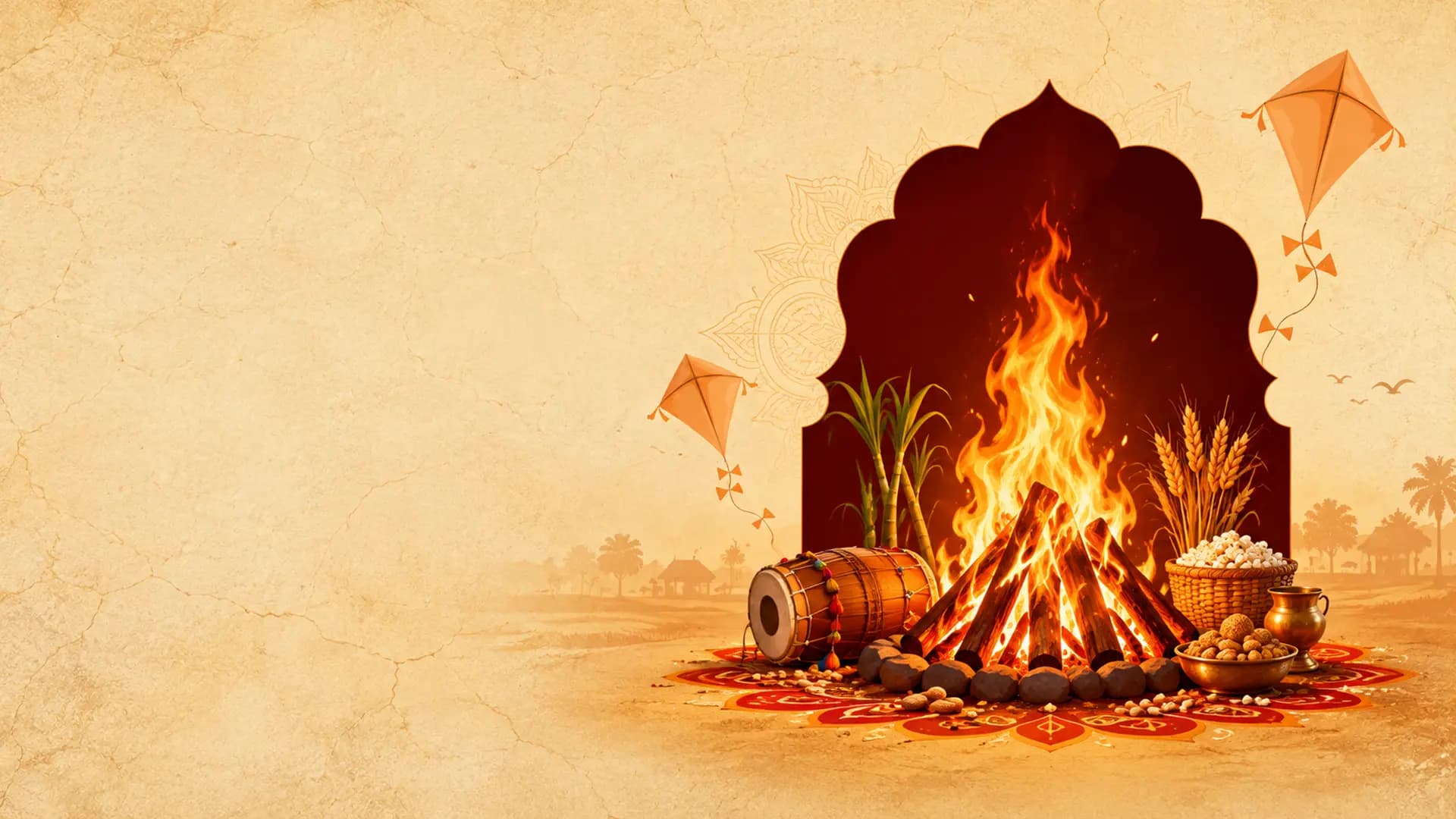
Lohri has a bonfire which is the most prominent part of this festival. Neighbours and families would congregate in the evening around the bonfire. Offerings like puffed rice, popcorn, peanuts, jaggery, sesame seeds are thrown into the fire in some parts.
Folk songs are an important part of Lohri celebrations. There is a song called Sundar Mundriye linked to the story of Dulla Bhatti. Children visit homes singing Lohri songs and receive sweets, jalebis, or money.
Bhangra and Gidda are usually performed at festivals. Group dance is accompanied by the sound of the dhol and is usually performed in traditional Punjabi dress. Local fairs may also feature food and live music.
Rewri, popcorn, peanuts, jaggery desserts and gajak are usually eaten during Lohri. Sarson da saag and makki di roti are also popular winter foods in Punjab. Foods may vary depending on local and family traditions.
Celebrations Across Regions
Lohri is mostly celebrated in Punjab. Families, neighbourhoods and villages organise bonfires, folk songs and traditional food. Lohri is strongly associated with rural life of Punjabis.
In Haryana, Lohri is celebrated by family, music, sweets and bonfires. There are regional differences in Himachal Pradesh where the festival is also celebrated.
In the Jammu, people celebrate Lohri with traditional activities such as Chajja processions and Hiran folk dances. The cultural diversity of the larger area is reflected in these customs.
Lohri is celebrated around the same time as other Indian harvest festivals such as Makar Sankranti, Pongal and Magh Bihu. festival has its own traditions but all of them celebrate farming and the changing seasons.
Delhi and other places with sizable Punjabi populations also celebrate Lohri. Public events with music, dancing and traditional food are also arranged by cultural organisations and residential groups. Punjabi families living in abroad celebrate Lohri with family gatherings & community events.
Frequently Asked Question
Q. What is Lohri and why is it celebrated?
Lohri is a popular winter harvest festival celebrated every year on January 13. It is mainly observed in Punjab, Haryana, Himachal Pradesh, Delhi and parts of Jammu.
Q. Are Lohri and Makar Sankranti the same?
Lohri and Makar Sankranti are different festivals but both are linked to winter harvest season and are celebrated on consecutive days.
Q. Is it Lohri on 13 or 14 January?
Lohri is usually celebrated on January 13 every year. In some years it may fall on January 14 depending on the Hindu calendar.
Q. Why is Lohri celebrated in Punjabi?
Lohri is a traditional Punjabi winter and harvest festival celebrated to thank nature for a good harvest.
Comments
When a person gives up all varieties of dharma and surrenders unto Me, I shall deliver him from all sinful reactions. Do not fear.
— Bhagavad Gita (18.66)
About the Author
ISKCON Kurukshetra
A team of devotees dedicated to sharing the timeless wisdom of Vedic scriptures and the teachings of Lord Krishna for the benefit of all seekers.
Our mission is to spread the message of Bhagavad Gita and Srila Prabhupada’s teachings with authenticity and devotion.