Guru Purnima: Meaning, Respect and Gratitude for Gurus
Guru Purnima is a hindu festival dedicated to honoring spiritual guides and academic gurus, teachers and mentors. It is a day in which we express gratitude for their guidance, knowledge and wisdom. The festival falls on the full moon day of the Hindu month of Ashadha usually in June or July. In 2027 Guru Purnima will be celebrated on Sunday, 18 July 2027. It is also known as Vyasa Purnima because it honours great sage Veda Vyasa.
Guru Purnima is a hindu festival dedicated to honoring spiritual guides and academic gurus, teachers and mentors. It is a day in which we express gratitude for their guidance, knowledge and wisdom. The festival falls on the full moon day of the Hindu month of Ashadha usually in June or July. In 2027 Guru Purnima will be celebrated on Sunday, 18 July 2027. It is also known as Vyasa Purnima because it honours great sage Veda Vyasa.
Guru Purnima reminds us that life is all about learning and lessons. A good teacher always helps their students to understand the world, make better decisions and how to grow individually. A spiritual guru also guides their devotees towards self realisation and a deeper understanding of life. The festival is celebrated by different communities such as Hindus, Buddhists and Jains with different traditions.
What Is Guru Purnima and Why Is It Celebrated?
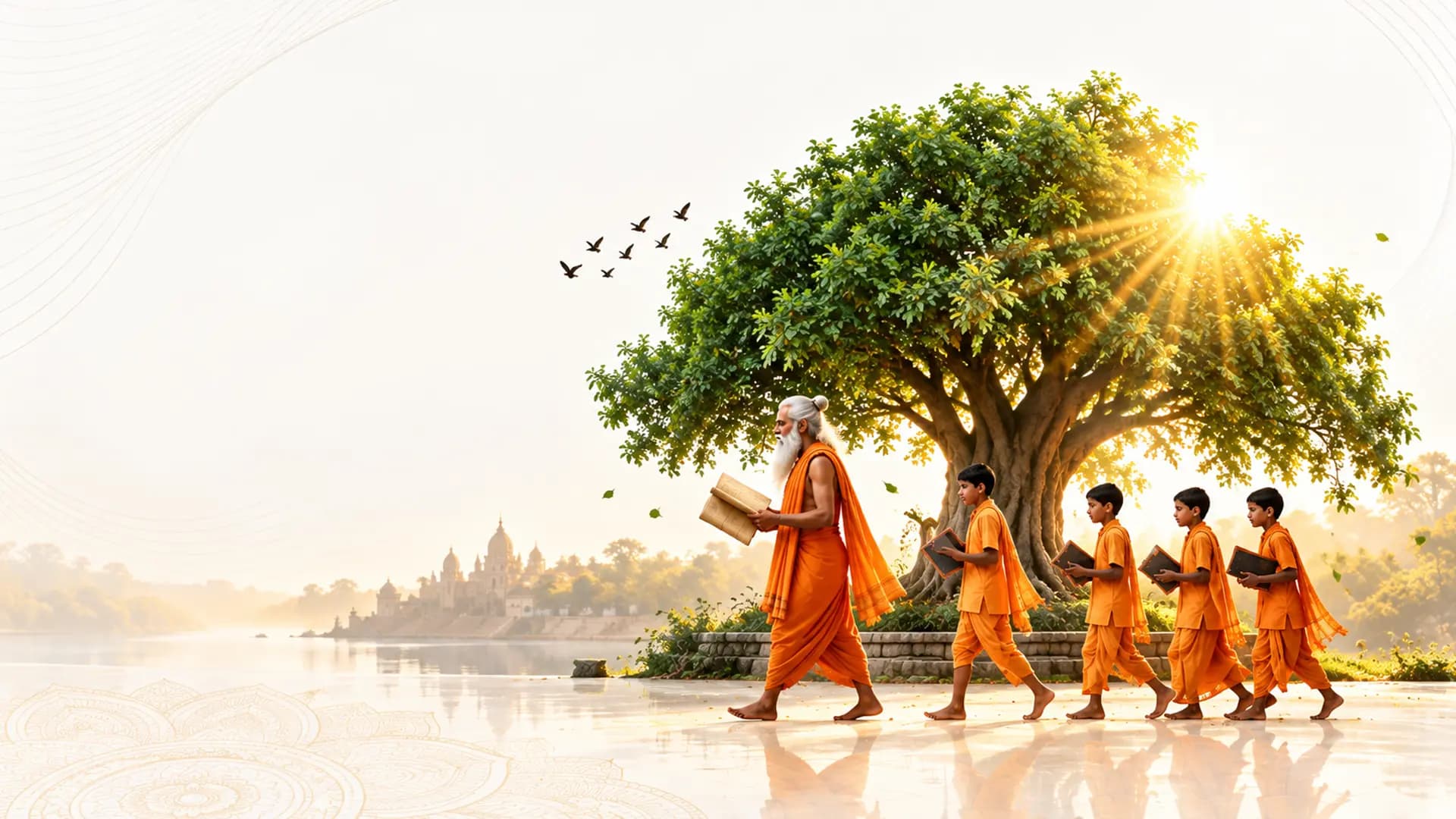
Guru Purnima is the celebration of the relationship between a teacher and a student. The word Guru means a teacher or spiritual guide while Purnima means the full moon day. In Indian culture, a guru helps us to understand spiritual teachings and use them in everyday life. The bond between a guru and a student is known as Guru-Shishya Parampara.
Maharishi Veda Vyasa is closely linked to this festival. He is known for compiling the Vedas and writing the Mahabharata. Devotees honour his contribution for protecting and spreading spiritual knowledge.
It is also an opportunity for students to thank their schoolteachers, mentors and spiritual guides. People honour their gurus with prayers, worship and other spiritual activities. The festival helps to highlight the importance of teachers in sharing knowledge and guiding students towards a better understanding of life.
History and Spiritual Significance
Guru Purnima comes from ancient Indian spiritual traditions. According to Hindu tradition, Maharishi Veda Vyasa's birthday anniversary falls on Ashadha Purnima. He is one of the most honoured sages in Hindu tradition.
In yogic traditions Guru Purnima is linked to Adiyogi, Lord Shiva, who is known as the first yogi. According to the Ancient stories he shared this knowledge with seven sages called the Saptarishis. Therefore, it shows how teachers pass their knowledge to students.
The festival is also important in Buddhism. Buddhists connect this day with Gautama Buddha first sermon at Sarnath, where he shared his first five disciples after gaining enlightenment.
In Jainism, Guru Purnima is connected to Lord Mahavira and his first disciple who is Gautam Swami. However, different Indian religions teach us to respect our teachers and follow their guidance as well.
Guru Purnima Mantra
Mantra chanting is a great way to show respect to a guru on Guru Purnima. The mantras are a way of showing gratitude to the guru. Mantras are chanted in schools, ashrams, temples, and homes all over India.
1. Guru Stotram (Gurur Brahma Mantra)
Sanskrit:
गुरुर्ब्रह्मा गुरुर्विष्णुः गुरुर्देवो महेश्वरः।
गुरुः साक्षात् परं ब्रह्म तस्मै श्रीगुरवे नमः॥
Transliteration:
Gurur Brahma Gurur Vishnu Gurur Devo Maheshwarah
Guruh Sakshat Param Brahma Tasmai Shri Guruve Namah
Meaning: The guru is the creator, preserver and transformer of our knowledge. Respect to the guru who helps us understand the highest truth.
2. Akhanda Mandalakaram Mantra
Sanskrit:
अखण्डमण्डलाकारं व्याप्तं येन चराचरम्।
तत्पदं दर्शितं येन तस्मै श्रीगुरवे नमः॥
Transliteration:
Akhanda Mandalakaram Vyaptam Yena Characharam
Tatpadam Darshitam Yena Tasmai Shri Guruve Namah
Meaning: Salutations to the guru who showed us that supreme state which pervades the entire universe, moving and unmoving.
3. Ajnana Timirandhasya Mantra
Sanskrit:
अज्ञानतिमिरान्धस्य ज्ञानाञ्जनशलाकया।
चक्षुरुन्मीलितं येन तस्मै श्रीगुरवे नमः॥
Transliteration:
Ajnana Timirandhasya Jnananjana Shalakaya
Chakshur Unmilitam Yena Tasmai Shri Guruve Namah
Meaning: Salutations to the guru who opened the eyes of one blinded by the darkness of ignorance, using the ointment of knowledge.
4. Vyasa Mantra
Sanskrit:
व्यासाय विष्णुरूपाय व्यासरूपाय विष्णवे।
नमो वै ब्रह्मनिधये वासिष्ठाय नमो नमः॥
Transliteration:
Vyasaya Vishnu Rupaya Vyasa Rupaya Vishnave
Namo Vai Brahmanidhaye Vasishthaya Namo Namah
Meaning: Salutations to Vyasa who is a form of Vishnu and to Vishnu who is a form of Vyasa. Salutations to the treasure house of divine knowledge and a descendant of sage Vasishtha.
5. Simple Mantra for Beginners
Om Gurave Namah (ॐ गुरवे नमः)
This short mantra means Salutations to the guru. It is child friendly and good for those new to mantra chanting. It is also very easy to remember.
Rituals and Traditions of Guru Purnima
Guru Purnima is celebrated in the form of thanks, prayers and devotional practices. Celebrations may differ as per religious belief, regional rituals and family practices.
One of the key celebrations during Guru Purnima is Guru Puja. This refers to the showing of respect and worship towards a guru. Devotees can offer sweets, fruits, flowers or anything else as an act of devotion. Devotees also go to spiritual centres, ashrams or temples to receive the blessings of their guru and participate in special worship including Sadhu Seva.
Another celebration is the recitation of spiritual literature. Devotees can recite the Bhagavad Gita or listen to spiritual discourses or partake in satsang. It allows the devotee to explore the teachings and ponder upon them.
Appreciation to past gurus or mentors can also be shown during Guru Purnima. Students can write a thank you note, give a small token of appreciation or simply listen to the advice of their guru. A heartfelt thank you note might be more valuable than a costly gift.
Prayer and meditation can also be extended during this time or a fast can be undertaken. This varies from person to person and also from religious tradition to religious tradition.
Spiritual organisations and temples also conduct discourses, communal events, kirtans, bhajans etc. during Guru Purnima. These events allow for the sharing of knowledge as well as devotion among devotees. Celebrations during Guru Purnima are not only about rituals but also about the importance of guidance and applying constructive knowledge.
Comments

When a person gives up all varieties of dharma and surrenders unto Me, I shall deliver him from all sinful reactions. Do not fear.
— Bhagavad Gita (18.66)
About the Author
ISKCON Kurukshetra
A team of devotees dedicated to sharing the timeless wisdom of Vedic scriptures and the teachings of Lord Krishna for the benefit of all seekers.
Our mission is to spread the message of Bhagavad Gita and Srila Prabhupada’s teachings with authenticity and devotion.