
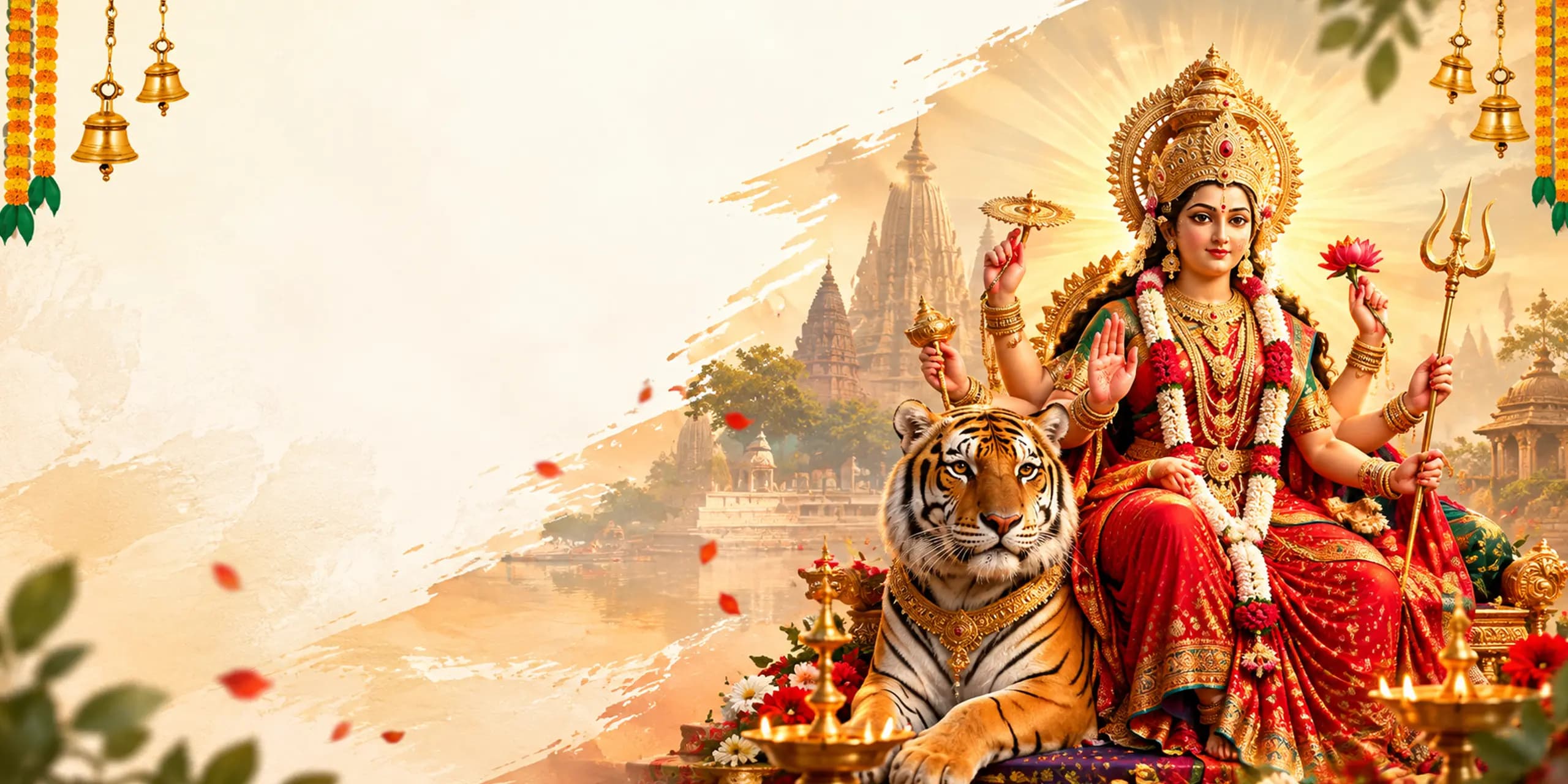
Navaratri: Dates, Significance & Nine Forms of Durga
Navaratri is a nine night Hindu festival dedicated to the worship of the divine feminine - the goddess Durga and her different forms. The festival commences on Sunday October 11, 2026 and continues for nine days until Monday October 19. Vijayadashami or Dussehra will be celebrated on Tuesday, October 20, 2026.
Navaratri is a nine night Hindu festival dedicated to the worship of the divine feminine - the goddess Durga and her different forms. The festival commences on Sunday October 11, 2026 and continues for nine days until Monday October 19. Vijayadashami or Dussehra will be celebrated on Tuesday, October 20, 2026.
The word Navaratri comes from two Sanskrit words. Nava means nine and Ratri means night. Thus the festival means “nine nights” – it is celebrated for nine nights and ten days.
There are different Navaratris during the Hindu lunar year. The most widely celebrated is Sharad Navaratri – also called Maha Navaratri. This falls in the month of Ashwin – usually in September or October.
Navaratri is a festival of devotion, Shakti and spiritual strength when devotees worship Goddess Durga and her nine forms. Many people observe fasts and visit temples engaging in puja, aarti, chanting of mantras and taking part in devotional programmes.
The festival signifies the victory of good over evil - the story central to Navaratri is that of the victory of the Goddess Durga over the demon Mahishasura. The tenth day celebrating this victory also falls on Lord Rama’s victory over Ravana in many parts of India.
Why Is Navaratri Celebrated?
Navaratri is celebrated to honour Goddess Durga, Shakti and the Divine Mother. The festival features several stories and traditions throughout India. One of the best known stories concerns the battle between Goddess Durga and Mahishasura.
Mahishasura was a powerful demon causing fear and disorder throughout existence. The divine powers gathered and formed the form of Goddess Durga who eventually defeated the demon after a long battle. Her win is celebrated in Navaratri. It is the triumph of light over darkness and good over evil.
The story also has an inner meaning. The demons may stand for negative traits like greed, ignorance, fear, pride, anger, etc. Navaratri is a time to overcome these and cultivate discipline, devotion and valour.
There are also traditions that link Navaratri with the worship of the Goddess by Lord Rama prior to his war against Ravana. The festival is linked to Vijayadashami, which is celebrated as a day of victory.
Navaratri can therefore be seen as both an outer celebration and an inner journey - a time to pray and reflect upon living a more positive and disciplined life.
Nine Forms of Goddess Durga
A Goddess Durga is worshipped on each day of Navaratri. There are nine such forms called Navadurga. Each form symbolizes an attribute of the Devi or the Divine Mother and has a unique devotional significance.
Day 1 - Shailaputri:
Maa Shailaputri is the first form of Durga. She symbolizes stability, purity and strength. This form marks the start of the spiritual path with faith and strength.
Day 2 – Brahmacharini:
Maa Brahmacharini is associated with self-control, patience and devotion. She provides the strength to endure trying circumstances and concentration on the desired objective.
Day 3 – Chandraghanta:
Maa Chandraghanta is associated with protection, peace and courage. Worshiping of this ma provide strength to surmount obstacles and overcome fear.
Day 4 – Kushmanda:
Maa Kushmanda represents creative energy, vitality & power of creation. We pray for our family and relatives to stay happy and healthy.
Day 5 – Skandamata:
Maa Skandamata is loving mother of Lord Kartikeya. She represents motherhood, compassion, love & protection.
Day 6 – Katyayani:
Maa Katyayani is a powerful form of Goddess Durga representing courage, strength and protection. Worshiping her helps you to overcome with obstacles and negative forces.
Day 7 – Kalaratri:
Maa Kalaratri is the fierce form of Durga who destroys darkness and evil. She represents fearlessness, protection and overcoming negative energy.
Day 8 – Mahagauri:
Maa Mahagauri depicts purity, peace and calmness. She helps people to find inner peace and focus on pure thoughts.
Day 9 – Siddhidatri:
Maa Siddhidatri, the final form among Navadurga, represents wisdom and fulfilment within spiritual world. Devotees seek this goddess for knowledge, prosperity & spiritual progress.
Nine forms reflect a deeper journey of spiritual growth. The first three help in developing strength and discipline. And the next three inspire us for love, courage, and positive qualities. However, final three represent purity, wisdom and spiritual awareness.
Celebrations and Traditions
Navaratri is celebrated differently across India. However there are some common traditions involving puja, fasting, aarti, music and temple visits. Many people start Navaratri with the ritual of Ghatasthapana or Kalash Sthapana wherein a sacred kalash is placed during the puja. It represents divine energy and auspiciousness.
Fasting is another important part of Navaratri with some undertaking a complete fast while others follow a specific diet during the vrat period - all for acts of self-control and focusing upon spiritual activities.
Devotees also visit temples and take part in Navaratri aarti, bhajans, kirtans and prayers. Many homes are decorated with diyas, flowers and images of Maa Durga.
Navaratri in Gujarat is famous for Garba and Dandiya Raas wherein people gather in colourful traditional clothes to dance together in expression of devotion and joy.
West Bengal celebrates the festival with grand Durga Puja celebrations. The region decorates magnificent idols of Maa Durga within pandals. These are days of prayer, culture and celebration.
North India celebrates this with fasting, temple visits and devotional programmes. This is also the time when Ramleela and Dussehra celebrations are common in the region.
In South India such traditions as Golu or Bommai Kolu are followed in many homes. Dolls and figures are part of the festival. On Ashtami or Navami the practice of Kanya Pujan occurs wherein young girls are seen as forms of the Goddess and are offered food and gifts.
Spiritual Meaning and Significance
The deeper meaning of Navaratri goes beyond fasting, dance, decorations and celebrations. It is a time to reconnect with God & spiritual life.
The festival tells us of the existence of divine strength within ourselves on the path of faith and righteousness. The story of Maa Durga’s victory reminds us of the eventual victory of truth over evil.
Navaratri also encourages discipline. Fasting helps many devotees practise control over their food and habits. Prayer and meditation helps us to calm our mind. Visiting temples and engaging in prayers helps devotees to feel more connected to faith.
The festival is a time to come together and spend some time with our loved ones. We can serve others by donating food, helping needy people, supporting temples & joining community activities.
Navaratri is a time to celebrate hope, faith and devotion. It inspires all of us to stay strong and keep faith in difficult time.
The festival brings people together through temple prayers, family puja, Garba, Dandiya, fasting & seva. Navaratri teaches us to choose good, stay devoted, overcome negativity, and follow right path.
Comments
When a person gives up all varieties of dharma and surrenders unto Me, I shall deliver him from all sinful reactions. Do not fear.
— Bhagavad Gita (18.66)
About the Author
ISKCON Kurukshetra
A team of devotees dedicated to sharing the timeless wisdom of Vedic scriptures and the teachings of Lord Krishna for the benefit of all seekers.
Our mission is to spread the message of Bhagavad Gita and Srila Prabhupada’s teachings with authenticity and devotion.
You May Also Like
Ekadashi
Utpanna Ekadashi 2025: Date, Vrat Vidhi and Significance
5 min read
General
Pitru Paksha 2025: Dates, Time, Rituals & Significance
5 min read
Ekadashi
Indira Ekadashi 2025: Timings, Vrat Katha and significance Benefits
6 min read
Ekadashi
Parsva Ekadashi 2025: Date, Timings, Vrat Katha & Rituals
4 min read
Festivals
Radha Ashtami 2025: Date, Time, Puja Vidhi & Significance
9 min read