
Damodarashtakam: Lyrics, Meaning and How to Sing It in Kartik
The eight verses of Damodarashtakam in Sanskrit and English letters, the meaning of each, the pastime behind the prayer, and how devotees sing it every Kartik evening.
By ISKCON KurukshetraFestivals0 comments
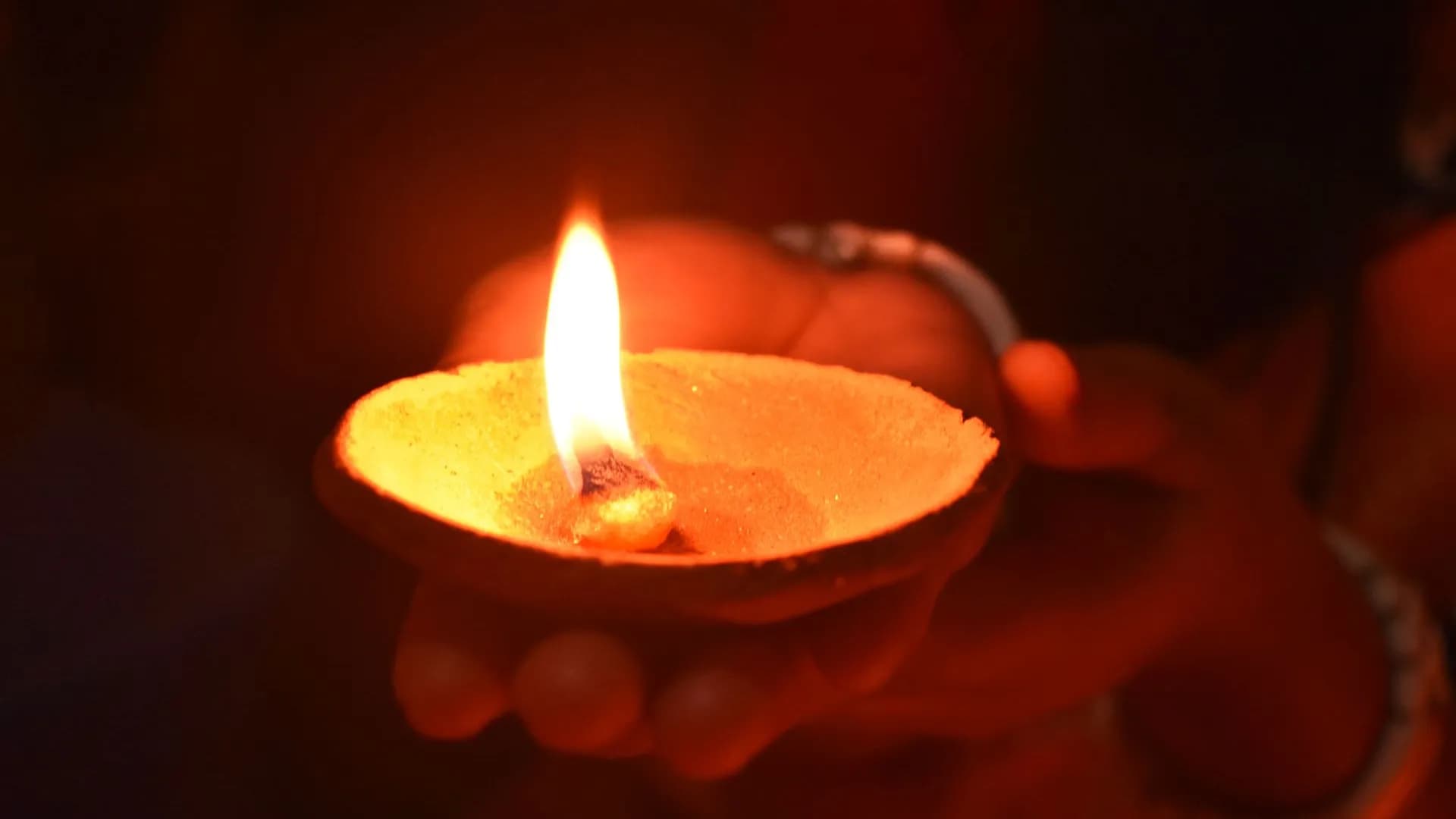
Every evening of Kartik, in temples and in homes, small lamps are held up before Lord Krishna while devotees sing eight verses that begin namāmīśvaraṁ sac-cid-ānanda-rūpaṁ. This is Damodarashtakam, the prayer to Krishna as Damodara, the child whose mother tied Him with a rope. It comes from the Padma Purana, and Srila Prabhupada asked his disciples to sing it every Kartik evening.
The pastime the prayer remembers
Mother Yasoda was churning butter that morning, singing of His childhood pastimes, when Krishna came to her hungry and caught hold of the churning rod (Srimad-Bhagavatam 10.9.4). She fed Him on her lap until the milk on the stove boiled over and she had to put Him down. Krishna broke the pot of yogurt in a temper and ran off with the butter.
When she came back and saw the broken pot, she smiled. In the Krsna book, Srila Prabhupada gives her thought: "The child is very clever. After breaking the pot He has left this place, fearing punishment." She found Him on an upturned mortar, sharing the butter with the monkeys, and came up behind Him quietly with a stick. He saw her and fled.
The chase did not last. Her hair came loose and the flowers fell from it, but she caught Him, and He stood there rubbing His eyes, close to tears. She put the stick down and reached for a rope instead, and every rope she joined fell short by two fingers (10.9.15). The Bhagavatam then tells what finally moved Him:
स्वमातुः स्विन्नगात्राया विस्रस्तकबरस्रजः ।
दृष्ट्वा परिश्रमं कृष्णः कृपयासीत् स्वबन्धने ॥sva-mātuḥ svinna-gātrāyā visrasta-kabara-srajaḥ / dṛṣṭvā pariśramaṁ kṛṣṇaḥ kṛpayāsīt sva-bandhane
Because of mother Yaśodā’s hard labor, her whole body became covered with perspiration, and the flowers and comb were falling from her hair. When child Kṛṣṇa saw His mother thus fatigued, He became merciful to her and agreed to be bound.
Srimad-Bhagavatam 10.9.18
In his purport to Srimad-Bhagavatam 10.10.27, Srila Prabhupada calls this the dāmodara-līlā and quotes the Hari-vamsa: because He was bound with a rope, the gopis of Vraja sing of Him as Damodara.
Keep that scene in mind as you read the first two verses: the child running from the mortar, His frightened eyes, the necklace trembling with His sobs. The prayer stays right there, and asks for nothing more than to keep that sight in the heart.
Damodarashtakam lyrics and meaning
Verse 1
नमामीश्वरं सच्चिदानन्दरूपं लसत्कुण्डलं गोकुले भ्राजमानम् ।
यशोदाभियोलूखलाद्धावमानं परामृष्टमत्यन्ततो द्रुत्य गोप्या ॥ १ ॥
namāmīśvaraṁ sac-cid-ānanda-rūpaṁ
lasat-kuṇḍalaṁ gokule bhrājamānam
yaśodā-bhiyolūkhalād dhāvamānaṁ
parāmṛṣṭam atyantato drutya gopyā
I bow to the Supreme Lord, whose form is eternal, full of knowledge and bliss, whose earrings swing as He shines in Gokula. Afraid of Mother Yasoda, He has jumped down from the wooden mortar and run away, but she has run even faster and caught Him from behind.
Verse 2
रुदन्तं मुहुर्नेत्रयुग्मं मृजन्तं कराम्भोजयुग्मेन सातङ्कनेत्रम् ।
मुहुः श्वासकम्पत्रिरेखाङ्ककण्ठस्थितग्रैवं दामोदरं भक्तिबद्धम् ॥ २ ॥
rudantaṁ muhur netra-yugmaṁ mṛjantaṁ
karāmbhoja-yugmena sātaṅka-netram
muhuḥ śvāsa-kampa-trirekhāṅka-kaṇṭha-
sthita-graivaṁ dāmodaraṁ bhakti-baddham
He is crying, rubbing His frightened eyes again and again with His two lotus hands, and the necklace on His neck, marked with three lines like a conch, trembles with His sobbing breath. I bow to this Damodara, whose waist is bound not so much by the rope as by His mother's love.
Verse 3
इतीदृक्स्वलीलाभिरानन्दकुण्डे स्वघोषं निमज्जन्तमाख्यापयन्तम् ।
तदीयेशितज्ञेषु भक्तैर्जितत्वं पुनः प्रेमतस्तं शतावृत्ति वन्दे ॥ ३ ॥
itīdṛk-sva-līlābhir ānanda-kuṇḍe
sva-ghoṣaṁ nimajjantam ākhyāpayantam
tadīyeśita-jñeṣu bhaktair jitatvaṁ
punaḥ prematas taṁ śatāvṛtti vande
With pastimes like these He plunges the people of Gokula into a pool of joy, and He shows those who know only His greatness that He is conquered by the love of His devotees. With love I bow to Him again, hundreds of times.
Verse 4
वरं देव मोक्षं न मोक्षावधिं वा न चान्यं वृणेऽहं वरेशादपीह ।
इदं ते वपुर्नाथ गोपालबालं सदा मे मनस्याविरास्तां किमन्यैः ॥ ४ ॥
varaṁ deva mokṣaṁ na mokṣāvadhiṁ vā
na cānyaṁ vṛṇe 'haṁ vareśād apīha
idaṁ te vapur nātha gopāla-bālaṁ
sadā me manasy āvirāstāṁ kim anyaiḥ
O Lord, You can grant any blessing, yet I do not ask You for liberation, nor for the highest form of it, nor for anything else. I ask only that this form of Yours, the cowherd child of Gokula, may always appear in my heart. What would I do with other blessings?
Verse 5
इदं ते मुखाम्भोजमत्यन्तनीलैर्वृतं कुन्तलैः स्निग्धरक्तैश्च गोप्या ।
मुहुश्चुम्बितं बिम्बरक्ताधरं मे मनस्याविरास्तामलं लक्षलाभैः ॥ ५ ॥
idaṁ te mukhāmbhojam atyanta-nīlair
vṛtaṁ kuntalaiḥ snigdha-raktaiś ca gopyā
muhuś cumbitaṁ bimba-raktādharaṁ me
manasy āvirāstām alaṁ lakṣa-lābhaiḥ
May Your lotus face, framed by soft dark curls with a reddish shine, kissed again and again by Mother Yasoda, with lips as red as the bimba fruit, always appear in my heart. A hundred thousand other gains mean nothing to me.
Verse 6
नमो देव दामोदरानन्त विष्णो प्रसीद प्रभो दुःखजालाब्धिमग्नम् ।
कृपादृष्टिवृष्ट्यातिदीनं बतानुगृहाणेश मामज्ञमेध्यक्षिदृश्यः ॥ ६ ॥
namo deva dāmodarānanta viṣṇo
prasīda prabho duḥkha-jālābdhi-magnam
kṛpā-dṛṣṭi-vṛṣṭyāti-dīnaṁ batānu
gṛhāṇeśa mām ajñam edhy akṣi-dṛśyaḥ
O Lord Damodara, O unlimited Vishnu, I bow to You. Be pleased with me, my master. I am sinking in an ocean of troubles; pour the rain of Your merciful glance on this fallen and foolish soul, take me as Your own, and let me see You.
Verse 7
कुवेरात्मजौ बद्धमूर्त्यैव यद्वत् त्वया मोचितौ भक्तिभाजौ कृतौ च ।
तथा प्रेमभक्तिं स्वकां मे प्रयच्छ न मोक्षे ग्रहो मेऽस्ति दामोदरेह ॥ ७ ॥
kuverātmajau baddha-mūrtyaiva yadvat
tvayā mocitau bhakti-bhājau kṛtau ca
tathā prema-bhaktiṁ svakāṁ me prayaccha
na mokṣe graho me 'sti dāmodareha
While You were still tied to the mortar, You freed the two sons of Kuvera and made them Your devotees. In the same way, O Damodara, please give me loving devotion to You. I have no wish for liberation.
Verse 8
नमस्तेऽस्तु दाम्ने स्फुरद्दीप्तिधाम्ने त्वदीयोदरायाथ विश्वस्य धाम्ने ।
नमो राधिकायै त्वदीयप्रियायै नमोऽनन्तलीलाय देवाय तुभ्यम् ॥ ८ ॥
namas te 'stu dāmne sphurad-dīpti-dhāmne
tvadīyodarāyātha viśvasya dhāmne
namo rādhikāyai tvadīya-priyāyai
namo 'nanta-līlāya devāya tubhyam
I bow to the shining rope that bound Your waist, and to Your waist, which holds the whole universe. I bow to Srimati Radhika, Your dearest one, and to You, the Lord whose pastimes have no end.
Srila Prabhupada quotes the third verse in the Caitanya-caritamrta and translates it this way:
‘Again let me offer my respectful obeisances unto the Supreme Personality of Godhead. O my Lord, I offer my obeisances hundreds and thousands of times with all affection because by Your personal pastimes You plunge the gopīs into an ocean of nectar. Appreciating Your opulence, devotees generally declare that You are always subjugated by their feelings.’
Caitanya-caritamrta, Madhya-lila 19.230
How to sing Damodarashtakam in Kartik
A week before Kartik began in 1974, Srila Prabhupada told his disciples in Mayapur what to do each evening of the month:
The duty will be that in the evening you'll offer candle, a small candle, all of you, just before the Deity; not within the room, outside the room; and chant the Dāmodarāṣṭaka, namāmīśvaram.
Lecture on Srimad-Bhagavatam 1.8.31, Mayapur, 11 October 1974
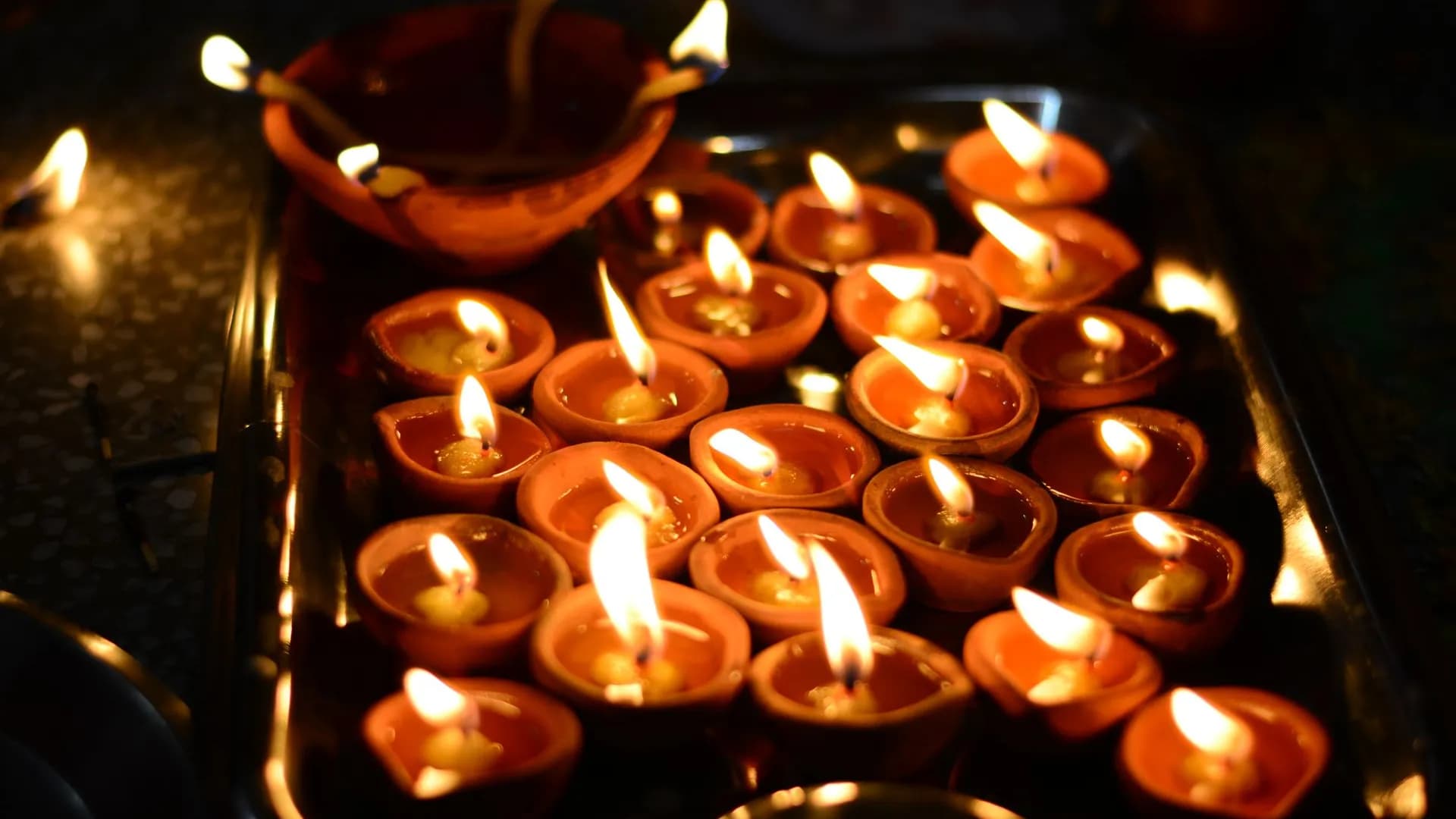
That is all it takes. When evening comes, light a small ghee lamp, stand before the Deity or a picture of Lord Damodara, and sing the eight verses while you offer it. If your family is with you, let each one offer the lamp in turn while the others sing. This year's dates, and every festival of the month, are on our Kartik month page.
Damodarashtakam at ISKCON Kurukshetra
Every evening of Kartik, devotees at ISKCON Kurukshetra sing Damodarashtakam and offer lamps to Lord Damodara. You are welcome to come and offer one with them.
Questions people ask
Who wrote Damodarashtakam?
It is from the Padma Purana, as Srila Prabhupada notes in his purport to Caitanya-caritamrta, Madhya-lila 19.230. Vaishnava songbooks give it as a prayer of the sage Satyavrata Muni.
When is Damodarashtakam sung?
Every evening of Kartik, the month of Lord Damodara, while devotees offer a small lamp. Many devotees love to sing it at other times of the year too.
What does Damodara mean?
Dama means rope and udara means waist. Damodara is Krishna as the child whose waist Mother Yasoda bound with a rope.
How many verses does Damodarashtakam have?
Eight, as the name says: ashtaka means a prayer of eight verses.
Hare Krishna Spiritual Journey
Seek the Divine.
Transform Your Soul.
Join the ISKCON KKR community — embrace bhakti, serve with love, and discover your eternal purpose.
About the Author
ISKCON Kurukshetra
A team of devotees dedicated to sharing the timeless wisdom of Vedic scriptures and the teachings of Lord Krishna for the benefit of all seekers.
Our mission is to spread the message of Bhagavad Gita and Srila Prabhupada’s teachings with authenticity and devotion.
You May Also Like
Festivals
कार्तिक मास: दामोदर की कथा, दीपदान, क्या करें और क्या न करें
5 min read

General
Mahadaan: The Importance of Giving to Others
7 min read
General
Gita Daan Seva: Sponsor Books for Spiritual Learning
4 min read
General
Birthday Donation
3 min read
Festivals
Guru Purnima: Meaning, Respect and Gratitude for Gurus
5 min read
Comments